
The short answer
Duct cleaning is worth it when you see heavy dust at the vents, find debris or pest signs in the ducts, or after a remodel or water problem. BayPro Heating & Cooling inspects first, cleans with negative-pressure equipment, and tells you plainly if sections need sealing, repair or replacement instead.
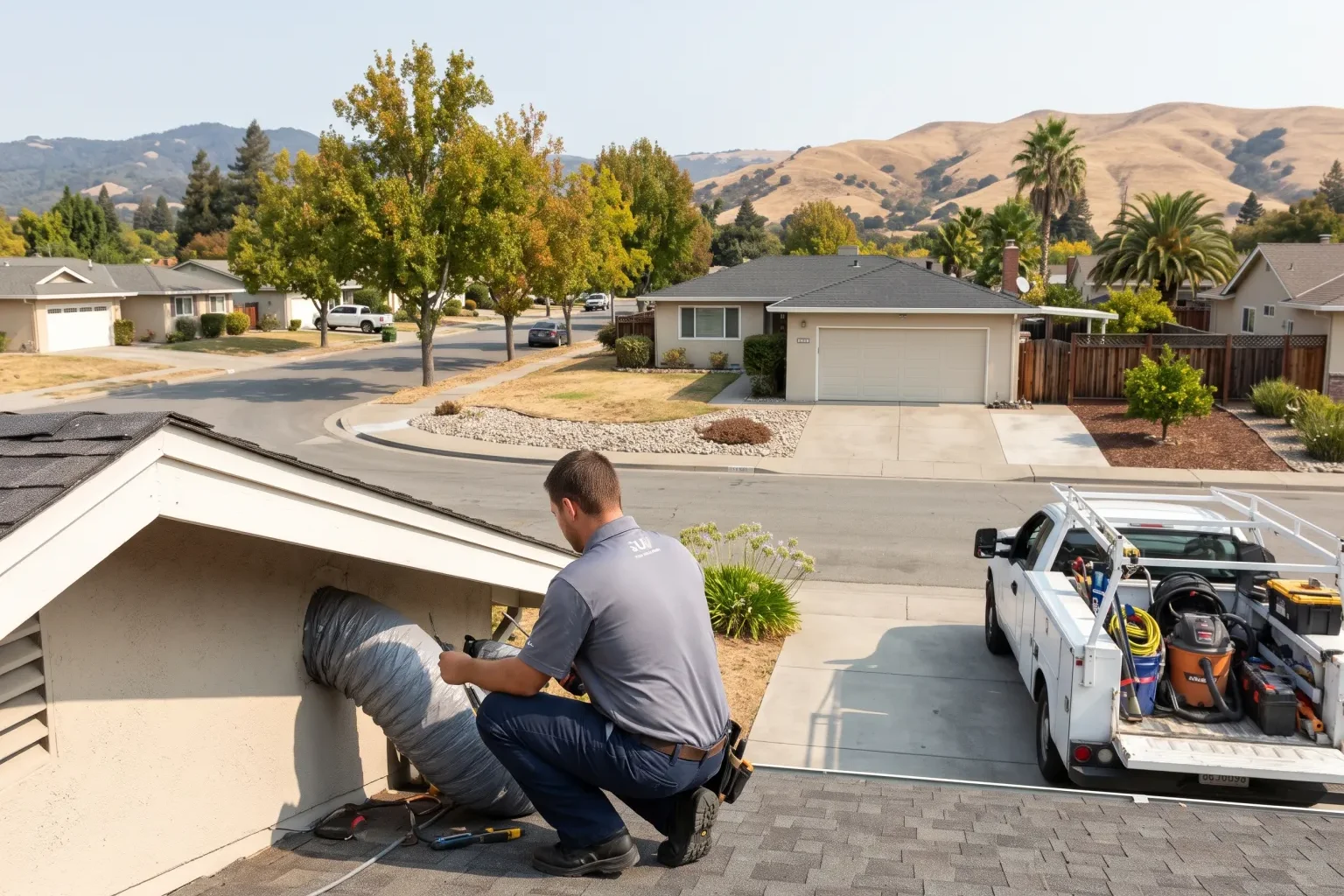
Ductwork is the part of a heating and cooling system almost nobody sees. It hides in attics, crawlspaces and wall cavities, carrying every bit of air your furnace, air conditioner or heat pump delivers. In the South Bay, long dry summers send fine dust drifting through open windows and garages, and mild, damp winters can leave crawlspace ducts holding moisture. Over enough years, ducts collect debris, come loose at the joints and sometimes host pests. BayPro Heating & Cooling inspects, cleans and repairs duct systems in San Jose and nearby cities. This page covers how to tell whether your ducts need attention, what our inspection looks at, when cleaning is enough and when sections should be repaired or replaced, what determines the cost, and how a visit unfolds.
Clues that your ducts need a look
Not every home needs routine duct cleaning, and we will not suggest it without reason. These are the situations where an inspection usually pays off:
- Gray dust collects on supply grilles or puffs out when the blower starts
- Furniture and shelves need dusting much more often than they used to
- A remodel, drywall work or floor sanding happened while the system was running
- You have seen droppings, nesting material or insect activity near vents or the furnace
- A musty or stale odor comes from the registers, especially when heat first turns on
- Water got into the attic or crawlspace from a roof leak, plumbing failure or flooding
- Some rooms get weak airflow even though the equipment works fine
- You just bought an older home and have no idea when the ducts were last serviced
What the inspection covers
Before any cleaning, we look at the whole air path. We remove a few registers and the return grille, and where it is practical, we use a camera to see inside the duct runs. We note the kind of duct material, whether it is metal, flexible duct or duct board, since each one is cleaned differently and some older materials need extra care.
In the attic or crawlspace, we follow the trunk lines and branches looking for torn insulation jackets, sagging or kinked flex duct, joints that have pulled apart and spots where a duct simply ends in open air. In older San Jose and Santa Clara homes, we often find runs that were disconnected during a past roofing or insulation job and never reconnected. That kind of leak sends conditioned air into the attic and pulls dusty attic air back into the house.
We also check the furnace or air handler cabinet, the blower wheel, the evaporator coil face and the filter slot. A filter that does not seal well lets debris bypass it, which is one of the most common reasons ducts get dirty in the first place. If the blower wheel is caked with dust, cleaning only the ducts would leave the problem half solved.
Clean, repair or replace
If the duct system is intact and simply dirty, cleaning is the right fix. We connect a powerful vacuum to the system to put it under negative pressure, then work through each branch with brushes and air tools to loosen debris so it is pulled out rather than blown into the house. Registers and grilles are cleaned, and the blower compartment is addressed as part of the job.
When we find damage, cleaning alone will not solve the comfort or dust problem. Loose joints can be refastened and sealed with mastic or approved tape. Short sections of crushed or torn flex duct can be cut out and replaced. A run that has been chewed by rodents or soaked by water is usually better replaced outright, since wet insulation can hold odors and mold growth.
Sometimes the honest answer is that the duct system has reached the end of its life. Very old flex duct that has become brittle, duct board that is crumbling, or a layout that never matched the house can make full replacement the more sensible choice. If you are also considering a heat pump, that is a good moment to rethink the ducts, because a new system performs only as well as the air path it is connected to. We will explain what we saw and let you decide.
What affects the cost
Your quote reflects the work your home actually needs. The main factors are:
- Number of supply and return registers and total length of duct runs
- Whether the ducts run through an attic, a crawlspace or both, and how easy they are to reach
- Duct material, since flex duct and duct board need gentler methods than sheet metal
- How much debris is present, including construction dust or pest contamination
- Whether the blower, coil or furnace cabinet also need cleaning
- Sealing, repair or replacement of damaged sections found during inspection
- Homes with more than one system or several zones
How a duct cleaning visit goes
When you reach out, we ask about the size of the home, where the ducts run and what prompted the call. That helps us bring the right equipment and set aside enough time. It also helps if you can clear a path to the furnace, the attic hatch or the crawlspace entry.
On the day of service, the technician inspects first and shows you what they found, including photos or camera footage when possible. You get a written description of the recommended work before anything begins. During cleaning, we cover floors near work areas and seal off registers as we go. Once finished, we install a fresh filter if you have one on hand or recommend the right size, run the system and check airflow at the registers.
We provide duct inspection, cleaning and repair in San Jose and nearby cities including Campbell, Santa Clara, Milpitas, Sunnyvale, Cupertino, Saratoga, Los Gatos, Monte Sereno and Mountain View.