
The short answer
A new cooling system makes sense when your home has none, when an old unit keeps failing, or when a major part like the compressor dies. BayPro Heating & Cooling sizes each install to the house, checks the ducts and electrical service, and explains the choice between a central AC, a heat pump and ductless units.
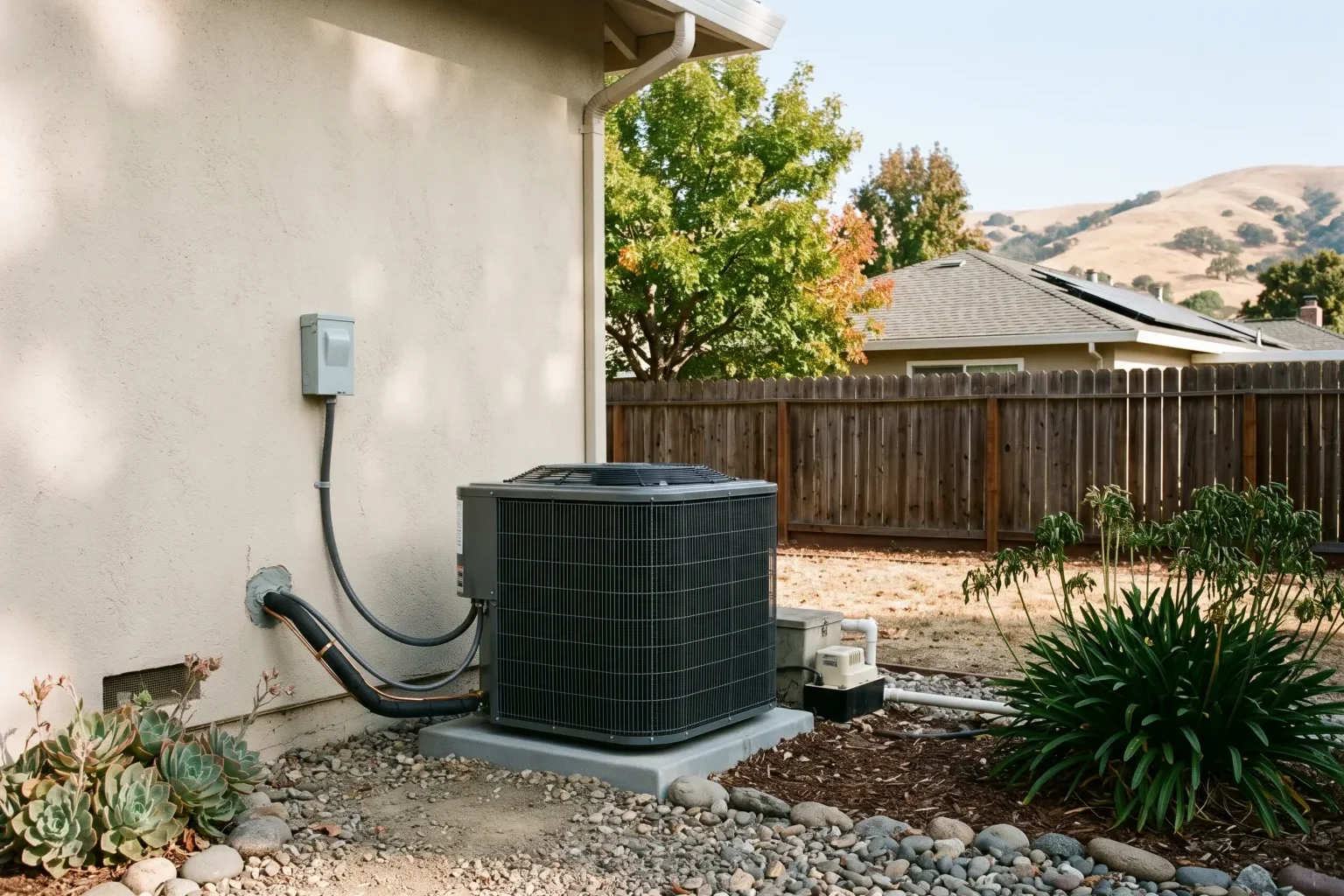
Plenty of South Bay houses were built without air conditioning, because for most of the year the climate did not demand it. That has changed for many households. Warm spells push indoor temperatures up for days at a time, especially in the southern and inland parts of the Santa Clara Valley, and older cooling systems added decades ago are reaching the end of their service lives. BayPro Heating & Cooling installs central air conditioners, heat pumps and ductless systems for homes in San Jose and nearby cities. Below we explain when installation makes sense, what we evaluate first, how to decide between keeping an older unit and starting fresh, which factors move the cost, and the steps of an install from first visit to final walkthrough.
Is it time for a new system?
Homeowners usually reach us at one of a few turning points. Recognizing yours helps frame the rest of the decision:
- The house has never had cooling and summer afternoons have become uncomfortable
- The existing AC needed significant repairs two summers in a row
- A technician found a failed compressor or a leaking coil on an aging unit
- The system uses an older refrigerant that is costly to recharge
- Some rooms stay hot no matter how long the system runs
- A remodel or addition has changed the size and layout of the home
- The furnace is also old, and replacing both together could be simpler
What we evaluate before recommending equipment
A good installation begins with measurement rather than a quick guess based on square footage. We do a load calculation that considers window area and orientation, insulation levels, ceiling height, air leakage and how many people live in the home. An oversized unit cools quickly but runs in short bursts, leaving the air clammy and wearing out parts. An undersized one runs constantly on hot days and still falls behind.
Next, we look at the ducts. In many San Jose ranch homes, the original duct system runs through a hot attic with thin insulation and joints that have loosened over time. A new air conditioner connected to leaky, undersized ducts will never reach its potential, so we inspect, measure static pressure and tell you whether the ducts can be reused, need sealing and repair, or should be redesigned.
We also check the electrical panel and circuit, the location for the outdoor unit, the distance to neighbors and windows, the condensate drain route and the condition of the indoor furnace or air handler that will move the air. Each of these can change what we recommend.
Choosing between keeping, repairing and replacing
If you already have an air conditioner, the first question is whether it truly needs replacing. Sometimes a unit that seems worn out only needs a new capacitor, a cleaned coil or a duct fix, and we will tell you that. When installation is the right call, there are three main paths.
A standard central air conditioner pairs with your existing gas furnace and shares its blower and ducts. It is a familiar setup and a straightforward swap when the furnace is in good shape.
A heat pump looks like an air conditioner outside but also heats the home in winter. With mild, damp South Bay winters, heat pumps are well suited to the climate. Bay Area Air District rules do not require replacing a working furnace, yet gas furnaces manufactured from 2029 must meet a zero-NOx emission standard, so many homeowners choose a heat pump now to avoid a second project later.
Ductless mini-splits suit homes without ducts, converted garages, additions and second floors that the main system cannot reach. Each indoor head controls its own zone.
On incentives: the federal 25C tax credit covered qualifying heat pumps placed in service before December 31, 2025, and is not available for new installations after that date. BayREN and your local clean energy provider may have current electrification incentives. Amounts change by funding cycle, so we confirm the current offer before including it in a proposal.
What shapes the cost of an installation
Every proposal we write is specific to the house. The main variables are:
- System type: central AC, heat pump, or one or more ductless zones
- Capacity and efficiency level of the equipment
- Whether the ducts are reused as-is, repaired, or partly replaced
- Electrical work, such as a new circuit, disconnect or panel capacity upgrade
- Placement of the outdoor unit and any pad, bracket or line set routing
- Attic, crawlspace or closet access for the indoor coil or air handler
- Permits and inspections required by your city
- Thermostat or control upgrades, including zoning for larger homes
Installation day and beyond
After you approve a written proposal, we schedule the work and pull any required permits. On installation day, the crew protects floors and work areas, removes the old equipment if there is any, and sets the new outdoor unit and indoor coil or air handler. We run or reuse the refrigerant lines, pressure-test them, pull a vacuum to clear moisture and charge the system to the manufacturer's specification. Electrical connections, the condensate drain and the thermostat come next.
Before we leave, we start the system, measure airflow and temperature drop, confirm it cycles correctly and show you how to use the thermostat and where the filter goes. We also leave the paperwork you need for the permit inspection and a record of the model and serial numbers installed.
We install cooling systems throughout San Jose and nearby cities such as Santa Clara, Sunnyvale, Campbell, Cupertino, Milpitas, Los Gatos, Saratoga, Los Altos and Fremont.
AC Installation by city
- AC Installation in Santa Clara
- AC Installation in Campbell
- AC Installation in Milpitas
- AC Installation in Los Gatos
- AC Installation in Sunnyvale
- AC Installation in Monte Sereno
- AC Installation in Cupertino
- AC Installation in Saratoga
- AC Installation in Fremont
- AC Installation in Mountain View
- AC Installation in Los Altos
- AC Installation in Los Altos Hills