
The short answer
We repair forced-air furnaces, wall and floor furnaces, heat pumps and ductless systems in San Jose homes. A technician tests the system, explains the fault and gives you a price before any repair begins.
Ask ten San Jose homeowners what heats their house and you may hear ten different answers. Post-war ranches still run on floor furnaces set into the hallway. Bungalows near downtown rely on wall heaters. Newer tract homes have forced-air furnaces in the attic, and a growing number of houses now heat with ducted heat pumps or ductless mini-splits. BayPro Heating & Cooling repairs all of them. Because the valley's winters are mild and damp rather than harsh, many systems go months without running, and problems tend to surface all at once when the first chilly week arrives. This page covers the symptoms that call for a technician, how we approach diagnosis on different equipment, when it makes sense to fix rather than replace, what influences the repair bill and how an appointment works.
Symptoms That Mean It Is Time to Call
Heating trouble does not always mean a cold house. Often the system still produces some heat but runs longer, makes new noises or behaves inconsistently. Catching those early changes usually leads to a simpler repair than waiting for a full breakdown.
Timing matters as well. The first cold weeks of the rainy season bring a wave of calls across the valley, so testing your heat on a cool October evening, before you truly depend on it, gives you room to schedule a repair at a convenient time. Run the system for a full cycle, walk through each room and note anything that seems off. Those observations help our technician zero in on the fault faster.
- A thermostat calling for heat with no response from the equipment
- Lukewarm air from the registers or a heat pump that never seems to catch up
- A wall or floor furnace pilot that will not stay lit
- Clicking, humming or banging when the system starts or stops
- One end of the house noticeably colder than the other
- Ice that stays on a heat pump's outdoor coil for long stretches
- Odd odors, such as gas, scorching or a musty smell from the vents
How Diagnosis Differs by System
Forced-air gas furnaces get a full sequence check: thermostat signal, inducer, pressure switch, ignition, flame proving and blower. On wall and floor furnaces, which are simpler but often much older, we focus on the pilot assembly, thermocouple or thermopile, gas valve, venting and the condition of the combustion chamber. These units sit close to living spaces, so we pay extra attention to clearances and to anything stored nearby.
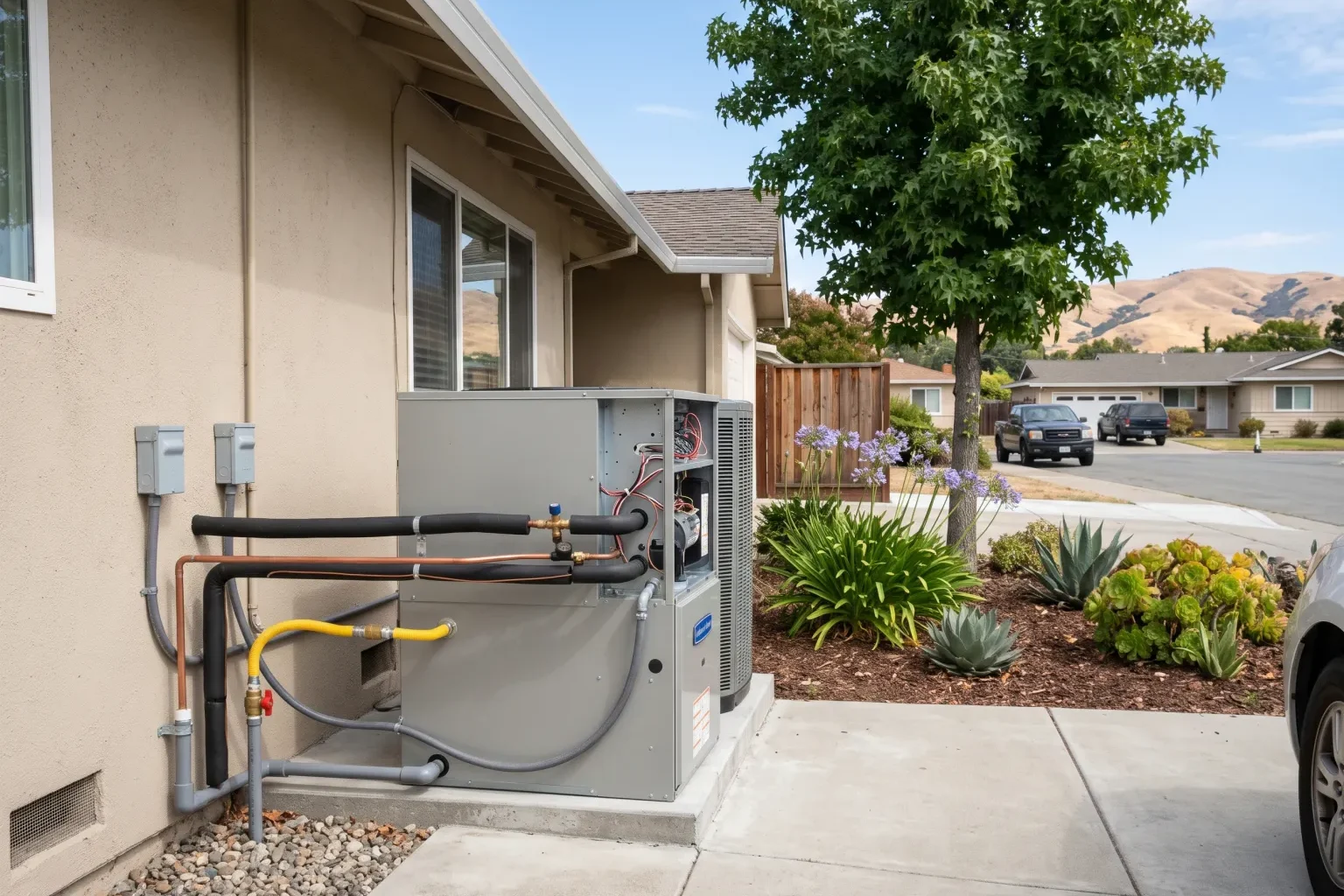
Heat pumps are diagnosed differently because the same machine also cools. We check refrigerant pressures, the reversing valve, defrost controls, outdoor fan and compressor operation, and the backup heat strips if the system has them. Ductless units add communication between indoor heads and the outdoor condenser, along with sensor and board diagnostics that often show up as error codes on the indoor display.
Regardless of system type, we also look at the supporting pieces: thermostat settings and wiring, air filters, return air paths and the ductwork where it is accessible. A surprising share of heating complaints come from a failing thermostat or a disconnected duct in the attic rather than the heating equipment itself.
Fix What You Have or Plan a Replacement
Our default is to repair. If the equipment is safe and the fault is a reasonable part, such as an igniter, thermocouple, capacitor, contactor or sensor, fixing it is almost always the right call. We will be upfront when a repair is a short-term patch rather than a lasting solution, so you can plan accordingly.
Older floor and wall furnaces deserve a frank conversation. Many are past the point where parts are easy to find, and some show heat exchanger wear or venting issues that cannot be corrected economically. When a gas heater fails or is replaced, Bay Area Air District rules come into play: natural gas furnaces manufactured from 2029 must meet a zero-NOx standard, which points many replacements toward heat pumps. The rules do not require replacing equipment that still works. If a ductless mini-split or a ducted heat pump would serve you better than another gas heater, we will explain why and what that project would involve.
What Determines the Repair Price
You will see a firm price for the work before we start. The amount reflects the system type, the specific part that failed and the effort needed to reach it. Parts for current forced-air furnaces and heat pumps are often stocked locally, while components for older wall heaters or discontinued models may need to be ordered.
Access also plays a role. A furnace in a garage is quick to work on, while a horizontal unit in a low attic or a floor furnace with a tight crawlspace takes more time. If we find secondary problems while diagnosing, such as a damaged flue connector or a duct that has come loose, we list them separately so you can choose what to address now and what to schedule later.
We also try to keep return trips to a minimum. Our vans carry common parts for the systems we see most often in the area, and when a component must be ordered, we can sometimes make a safe temporary adjustment so you have heat while you wait. If that is not possible, we explain why and give you a realistic timeline for the part.
Your Appointment, Step by Step
When you call, tell us what kind of system you have if you know it, where the equipment is located and what it is doing. That lets the technician arrive with the right tools and likely parts. On site, they will confirm the symptoms with you, test the system and explain the problem in plain terms, without jargon.
After you approve the repair, the technician completes it, then runs the system long enough to confirm steady heat at the registers or indoor heads. Safety checks on gas appliances include a leak test at the fittings and a carbon monoxide reading. Before leaving, we clean up and share a few practical tips, such as filter timing or thermostat settings, that help the repair last.
Heating Repair by city
- Heating Repair in Santa Clara
- Heating Repair in Campbell
- Heating Repair in Milpitas
- Heating Repair in Los Gatos
- Heating Repair in Sunnyvale
- Heating Repair in Monte Sereno
- Heating Repair in Cupertino
- Heating Repair in Saratoga
- Heating Repair in Fremont
- Heating Repair in Mountain View
- Heating Repair in Los Altos
- Heating Repair in Los Altos Hills