
The short answer
Most furnace problems in San Jose homes trace back to ignition parts, flame sensors, blower motors, pressure switches or restricted airflow. We diagnose the actual fault, make the repair and run safety checks so the furnace heats reliably again.
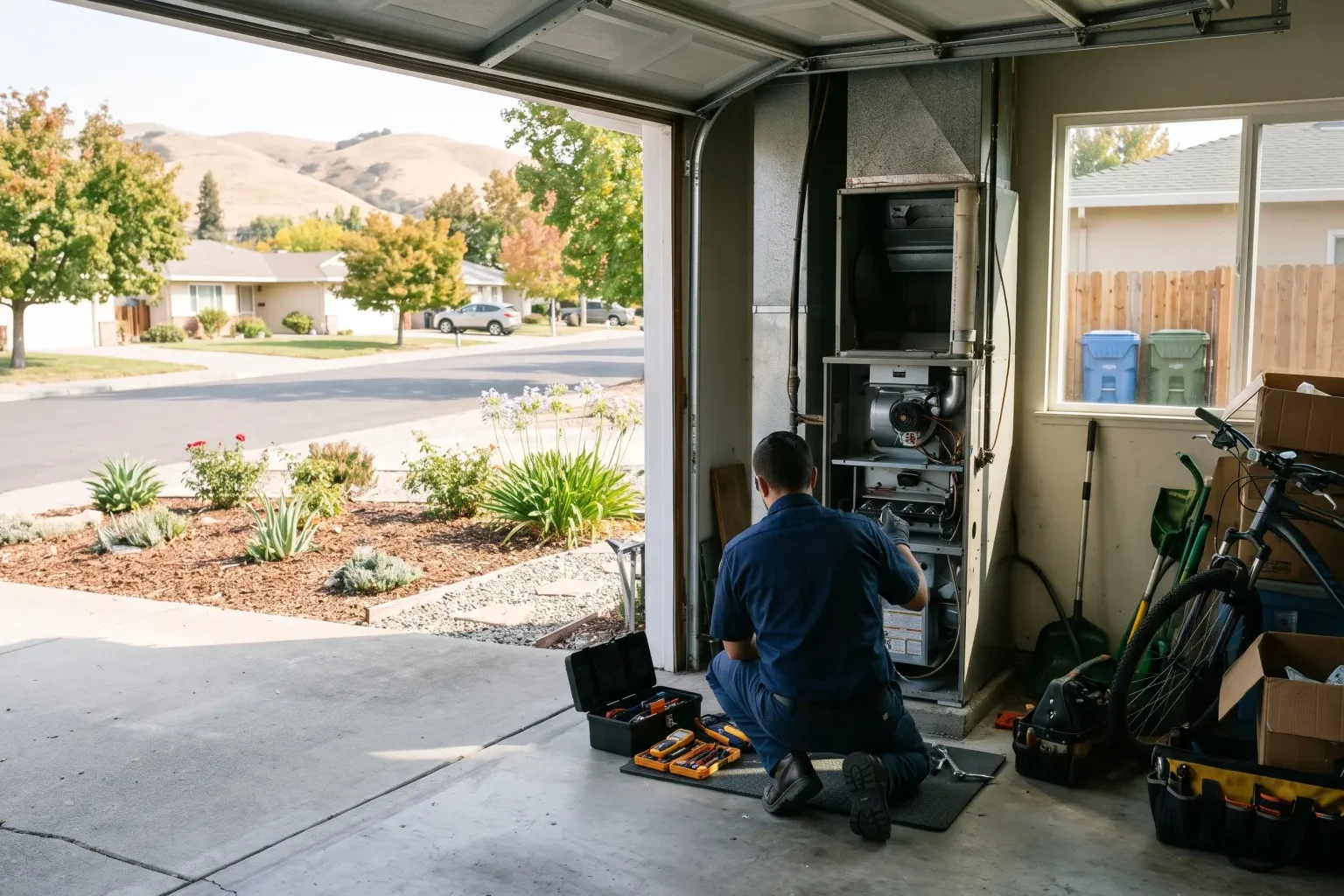
South Bay winters are gentle compared with most of the country, which is exactly why a furnace can sit idle for months and then refuse to cooperate on the first cold, damp night of the season. Dust settles on the burners, a flame sensor oxidizes, a capacitor that was marginal last spring finally gives out. BayPro Heating & Cooling repairs gas furnaces in homes across San Jose and neighboring communities, from upflow units in hall closets to horizontal models wedged into attics. Our goal on every call is simple: find the real cause, fix it properly, and tell you honestly how much life the furnace has left. Here is what to watch for, what our technicians test, how we think about repair versus replacement, what affects the bill, and how a typical service call runs from start to finish.
Warning Signs Your Furnace Needs Attention
Some symptoms are obvious, like a house that stays cold no matter what the thermostat says. Others are quieter and easy to ignore until they become a no-heat call on a Saturday night. Pay attention to how the furnace sounds, smells and behaves during a normal cycle, and call for service if you notice any of the following.
Older San Jose homes add a few twists. Furnaces in garages can take a beating from dust and stored items crowding the burner compartment, while attic units endure summer heat that dries out wiring and gaskets. A unit that has been tucked into a closet with paint cans and boxes around it may also be starved of combustion air. None of these problems announce themselves loudly, which is why an unusual noise or smell is worth a call rather than a wait-and-see approach.
- The blower runs but the air coming from the vents is cool
- The burners light, then shut off after a few seconds, over and over
- A blinking light code on the control board behind the furnace door
- Squealing, grinding or scraping noises from the blower area
- A persistent burning or electrical smell beyond the first dusty start of the season
- The furnace cycles on and off much more often than it used to
- A yellow, flickering burner flame instead of a steady blue one
How We Diagnose the Problem
A good repair starts with reading the furnace rather than guessing. We begin with the control board fault history, if the model stores one, and then watch a full startup sequence: inducer motor, pressure switch closing, igniter glow or spark, gas valve opening, flame proving and blower start. Where that sequence breaks down tells us where to focus.
From there we test individual components with a meter instead of swapping parts until something works. Flame sensor current, igniter resistance, capacitor values, limit switch continuity and gas pressure all get measured. We also check the things that cause parts to fail in the first place, such as a clogged filter, closed supply registers, a blocked condensate trap on high-efficiency units, or a restricted vent. Fixing the symptom without addressing the cause usually means another call a few weeks later.
Every repair visit includes a basic safety review. We inspect the visible portions of the heat exchanger, check venting and draft, look for gas leaks at fittings and test carbon monoxide levels around the appliance. If anything looks unsafe, we explain what we found in plain language before doing anything else.
Repair It or Replace It
Most of the furnaces we see can be repaired, and we would rather fix a sound unit than sell one you do not need. The math changes when the furnace is older, when the failed part is major, such as a heat exchanger or a control board on discontinued equipment, or when this is the third or fourth repair in a short span. In those situations we give you a straight comparison of repair cost against expected remaining life.
If replacement does become the better path, it helps to know the local context. The Bay Area Air District appliance rules do not require replacing working equipment, but natural gas furnaces manufactured from 2029 must meet a zero-NOx standard, which tends to steer future replacements toward heat pumps. Knowing that, some homeowners repair now and plan ahead; others decide to switch on their own timeline. Either way, the choice is yours.
What Affects the Cost of a Furnace Repair
We give you a clear price for the repair before work begins, so there are no surprises on the invoice. The amount depends mostly on the specific part that failed and how much labor it takes to reach and replace it. A flame sensor cleaning in an open closet is a very different job from replacing an inducer motor on a horizontal unit in a tight attic.
Other factors include whether the part is a universal replacement or a brand-specific component that has to be ordered, whether the call falls outside normal scheduling, and whether related issues such as a cracked condensate line or a worn blower belt turn up during the diagnosis. We always separate necessary repairs from optional improvements so you can decide what to do today and what can wait.
What to Expect During a Service Call
When you reach us, we ask a few quick questions about what the furnace is doing, its approximate age and where it is located. That helps the technician bring the most likely parts. On arrival, they will listen to your description, then head to the furnace and begin testing. You are welcome to watch, and most technicians are happy to explain what they are checking along the way.
Once the cause is found, you get an explanation and a price. With your approval, the repair is completed, the furnace is run through several full heating cycles, and temperature rise and safety controls are verified. Before leaving, the technician replaces or recommends a new filter, points out anything worth watching, and cleans up the work area.
Furnace Repair by city
- Furnace Repair in Santa Clara
- Furnace Repair in Campbell
- Furnace Repair in Milpitas
- Furnace Repair in Los Gatos
- Furnace Repair in Sunnyvale
- Furnace Repair in Monte Sereno
- Furnace Repair in Cupertino
- Furnace Repair in Saratoga
- Furnace Repair in Fremont
- Furnace Repair in Mountain View
- Furnace Repair in Los Altos
- Furnace Repair in Los Altos Hills