
The short answer
A ductless mini-split is a heat pump that heats and cools individual rooms without ductwork, which suits additions, ADUs and older San Jose homes. We size each indoor head to the room, plan line set routes and electrical, and install so the system runs quietly and efficiently.
Plenty of South Bay houses were never built for central air. A converted garage, a second-story bedroom that bakes every August, a 1950s ranch with a wall heater and no ductwork at all: these are the spaces where a ductless mini-split earns its place. BayPro Heating & Cooling plans and installs mini-split systems for homeowners in San Jose and the surrounding cities, from single-room setups to multi-zone layouts that heat and cool most of a home. A mini-split is a heat pump, so one outdoor unit handles both the cooling you want on a dry September afternoon and the gentle heat you need on a damp January morning. This page walks through when a ductless system makes sense, what we look at before recommending one, how to think about fixing an older unit versus starting fresh, the factors that shape the price, and what actually happens on install day.
Signs a Ductless System Fits Your Home
The clearest signal is a room your current system simply cannot reach. If a bonus room over the garage stays several degrees warmer than the rest of the house, or a sunroom turns into an oven by mid-afternoon, extending ductwork is often awkward, expensive and still disappointing. A wall or ceiling head placed in that room solves the problem at the source.
Another common case is the house that heats with a floor furnace, wall furnace or electric baseboards and has never had air conditioning. In the warmer, inland parts of the Santa Clara Valley, summer heat is the reason many people start looking, and a multi-zone mini-split can add cooling and modern heating in one project without tearing open ceilings for ducts.
- A garage conversion, ADU or addition with no connection to existing ducts
- Upstairs bedrooms that run hot while downstairs stays comfortable
- Window units you are tired of installing, removing and listening to
- An aging wall heater or baseboard system you want to retire
- Family members who want different temperatures in different rooms
What We Evaluate Before Recommending Equipment
Good ductless performance depends on sizing each indoor unit to the room it serves, not to the house as a whole. We measure rooms, note window area and orientation, look at attic and wall insulation, and ask how you actually use the space. A west-facing home office with two monitors running all day needs a different head than a north-facing guest room used twice a month.
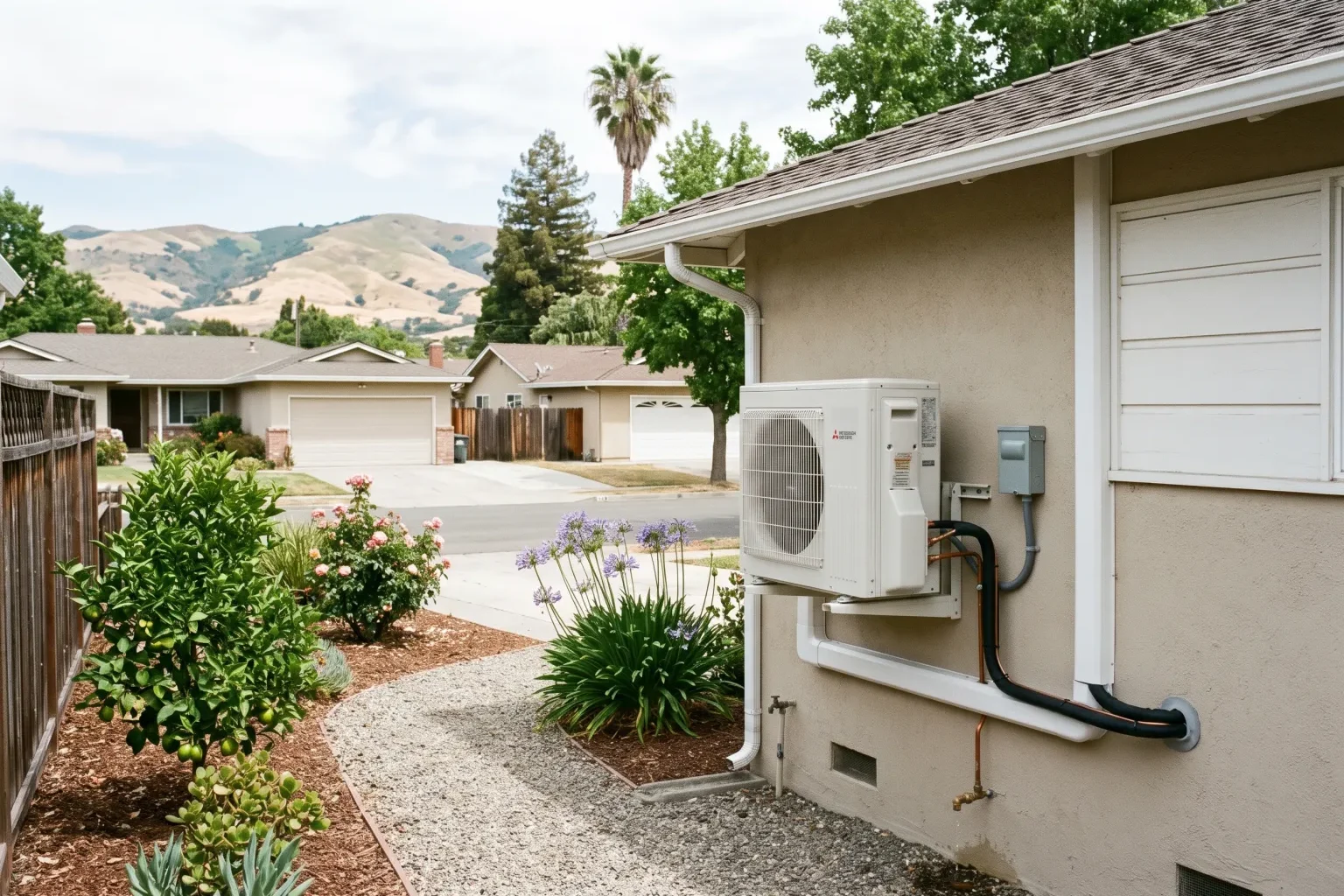
We also walk the exterior to find a sensible spot for the outdoor condenser, considering clearance, drainage, noise toward neighbors and the length of refrigerant line set needed to reach each head. Inside, we check where condensate can drain, whether the electrical panel has capacity for a new dedicated circuit, and how line sets can be routed so they are protected and tidy rather than snaking across the siding.
Finally, we talk through controls and aesthetics. Some people are fine with a slim wall head above a doorway; others prefer a ceiling cassette or a concealed ducted unit tucked into a closet or soffit. Each choice affects where air goes, how the room looks and what maintenance access is needed later. We would rather settle those preferences on the first visit than discover a mismatch after the brackets are on the wall.
Fixing an Existing Mini-Split or Starting Over
Some homeowners call us about a mini-split that came with the house and no longer keeps up. Often the problem is fixable: a clogged indoor coil, a blocked condensate line causing drips, a failing fan motor, a refrigerant leak at a flare fitting, or a communication fault between indoor and outdoor units. Cleaning and targeted repairs can bring a neglected system back to steady performance.
Replacement starts to make more sense when the system uses an older refrigerant that is getting harder to service, when the compressor has failed on an older unit, or when the original installer sized the heads poorly and the rooms have never been comfortable. In those situations we explain the tradeoffs plainly, including what a repair would buy you in remaining service life, so you can decide with full information rather than pressure.
What Shapes the Cost of a Ductless Project
We do not publish set prices because two mini-split jobs on the same street can differ a great deal. The quote we provide reflects the specific equipment and labor your home needs. These are the variables that move it most:
- Number of zones and indoor heads, and whether they are wall, ceiling cassette or ducted slim units
- Capacity of the outdoor unit and its efficiency rating
- Line set length and how difficult the route is through walls, attics or crawlspaces
- Electrical work, including a new circuit or a panel upgrade if capacity is short
- Mounting needs for the condenser, such as a wall bracket or ground pad
- Removal of old window units, wall heaters or baseboards
- Permits and inspection requirements in your city
How Installation Day Goes
Before we arrive, you will have a written scope listing each head location, the outdoor unit spot and the line set route we agreed on. On the day, the crew protects floors and furniture near the work areas, mounts the indoor brackets, drills the wall penetrations and sets the condenser. Line sets are run, flared and connected, then the system is pressure tested and pulled into a deep vacuum to remove moisture before refrigerant is released.
Once the electrical connections are complete, we start the system, check each head for airflow and temperature split, confirm condensate is draining properly and pair the remotes or thermostat controls. Before leaving, we show you how to use the different modes, how to clean the washable filters behind each front panel, and what normal sounds and defrost cycles look like in cooler months. Simple single-zone jobs usually finish in a day; larger multi-zone layouts can take longer, and we will tell you the expected timeline up front.
If your project qualifies for any heat pump or electrification incentive, we point you to BayREN and your local clean energy provider, since offers change by funding cycle and we confirm the current terms before including them in a quote.