
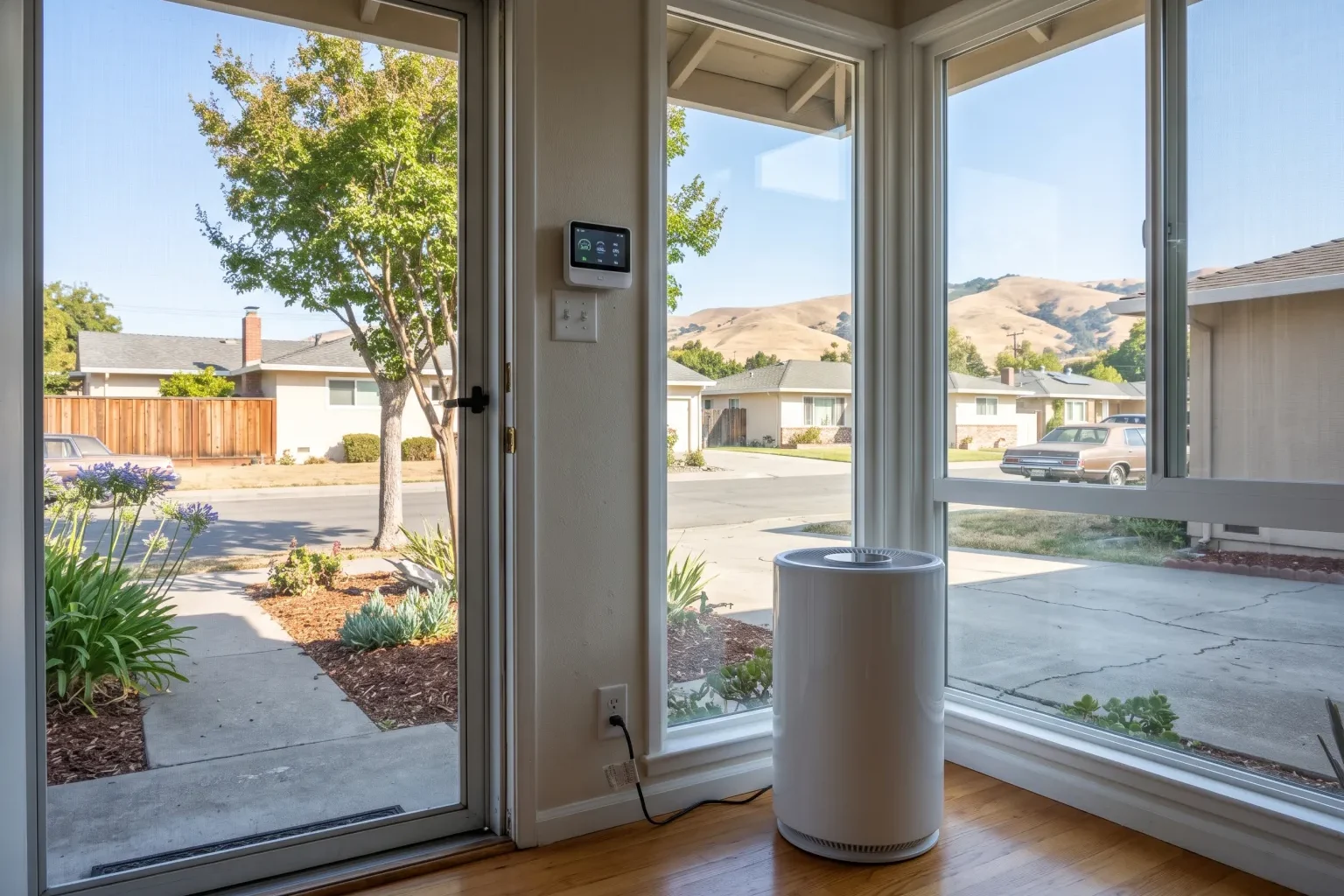
The short answer
Indoor air quality problems usually come from weak filtration, poor ventilation, humidity swings or a dirty HVAC system. We assess your home, explain the likely causes and recommend targeted upgrades such as better filters, air cleaners, ventilation or duct sealing.
The air inside a house is shaped by what happens outside it and by the HVAC system that moves it around. In the South Bay, that means dry summers that carry dust and pollen, wildfire smoke drifting in during some fall seasons, and damp winters when closed windows trap cooking fumes, moisture and pet dander. BayPro Heating & Cooling helps San Jose area homeowners improve the air they breathe at home, using upgrades that work with existing furnaces, air conditioners and heat pumps. We focus on filtration, ventilation, humidity control and the cleanliness of the system itself, and we recommend only the products that fit the actual problem. This page explains the signs of poor indoor air, what our assessment includes, how to decide between fixing existing components and adding new ones, what affects cost and how a visit proceeds.
Clues That Your Indoor Air Needs Help
Air quality problems are easy to live with because they creep in gradually. Pay attention to how the house feels and smells after it has been closed up for a day, and to how family members feel when they are home versus away. These patterns often point toward the cause.
- Allergy or asthma symptoms that ease when you leave the house
- Dust that settles on surfaces within a day or two of cleaning
- Lingering cooking, pet or musty odors
- Condensation on windows during winter or a stuffy feel in bedrooms
- Smoke smell indoors on days when outdoor air quality is poor
- Visible dust or dark streaks around supply registers
What Our Air Quality Assessment Looks At
We start by talking with you about what you notice and when. Seasonal allergies, a new baby, a family member with respiratory sensitivity, recent remodeling or a smoky week each suggest a different set of priorities. Then we look at the system that moves air through the house.
The HVAC inspection covers the filter rack and how well the filter actually seals, the blower wheel and evaporator coil for buildup, the condensate pan for standing water or growth, and the return air path for gaps that pull in attic or garage air. Where ducts are accessible, we look for disconnected sections, torn insulation and debris. Leaky return ducts in a dusty attic are one of the most common hidden sources of indoor dust in older South Bay homes.
We also consider ventilation and moisture. Bathrooms and kitchens without effective exhaust, a crawlspace that stays damp through winter, or a home tightened up with new windows but no added fresh air can all contribute to stale, humid indoor conditions.
Homes near busy roads, construction sites or open fields in the drier parts of the valley often deal with more fine dust, while houses closer to the Bay may contend more with winter dampness. We note those local conditions because they change which fix will have the biggest effect. A filtration upgrade will not solve a moisture problem, and a dehumidification strategy will not stop dust leaking through a torn return duct.
Improving What You Have or Adding Equipment
Often the first steps are simple fixes to the existing system. Upgrading to a higher-rated filter that your blower can handle, sealing gaps around the filter slot, cleaning a dirty coil and blower, or reconnecting a loose duct can make a noticeable difference without adding new hardware.
When those basics are covered and problems remain, dedicated equipment can help. Media air cleaners with deeper filters capture more fine particles while keeping airflow reasonable. Ventilation systems bring in filtered outdoor air while exhausting stale indoor air, which helps tightly sealed homes. Ductless mini-splits and heat pumps also help by running longer, gentler cycles that keep air moving through the filter more of the time. We explain the tradeoffs of each option, including maintenance needs, so you choose something you will actually keep up with.
If an older gas furnace is part of the picture and you are thinking about replacement anyway, it is worth knowing that Bay Area Air District rules require natural gas furnaces manufactured from 2029 to meet a zero-NOx standard. Working equipment does not have to be replaced, but some homeowners fold an air quality upgrade into a planned heat pump switch.
Factors That Influence Cost
Air quality work ranges from a quick filter and cleaning upgrade to a larger project involving ductwork and ventilation. We quote each job based on the specific steps your home needs. The main factors are:
- The type of filtration or air cleaner and whether the cabinet needs modification
- Amount of duct repair or sealing needed, and attic or crawlspace access
- Whether new ventilation equipment and exterior penetrations are required
- Cleaning needs for coils, blower assemblies or ductless indoor heads
- Electrical work for powered equipment
- Ongoing filter or media replacement costs over time
How an Air Quality Visit Unfolds
A visit begins with a conversation about your concerns, followed by a walk through the house and a close look at the HVAC equipment and accessible ducts. The technician will show you what they find, whether that is a filter bypassing air at the edges or a coil coated with dust, and explain how each finding connects to what you are experiencing.
You then receive recommendations ranked by likely impact, starting with the simplest fixes. Approved work can often be done the same day if it involves filters, cleaning or minor sealing. Larger upgrades are scheduled separately. After any installation, we explain maintenance steps, such as how often to replace filter media, so the improvement lasts.
Some results are immediate, such as a fresher smell once a moldy drain pan is cleaned. Others become clear over a few weeks, like less dust on shelves or easier sleeping during allergy season. We encourage you to check in after that period and tell us what changed, so any remaining issues can be addressed with a clearer picture.