
The short answer
A heat pump heats and cools with one system and suits San Jose's mild winters well. We check ducts, electrical capacity and home heat loss, size the equipment correctly and install it so it delivers steady, efficient comfort year-round.
Heat pumps have moved from a niche choice to a mainstream one in the South Bay, and for good reason: the Santa Clara Valley's Mediterranean climate, with dry summers and mild, damp winters, is close to ideal for equipment that moves heat rather than burning fuel to make it. One system cools the house during a hot spell and warms it through the rainy season. BayPro Heating & Cooling installs ducted heat pumps that connect to existing ductwork, as well as hybrid setups that pair a heat pump with a gas furnace for backup. If you are replacing an aging furnace and air conditioner, adding cooling to a house that never had it, or simply planning ahead for future Air District rules, this page explains how to tell if a heat pump suits your home, what we evaluate, how existing equipment fits into the decision, what drives the cost and how installation proceeds.
Is Your Home a Good Candidate?
The best moment to consider a heat pump is usually when something else is already changing. A furnace near the end of its life, an air conditioner that keeps needing refrigerant, a remodel that opens up walls, or a solar installation that makes electric heating more attractive are all natural starting points. Planning ahead lets you choose equipment on your terms rather than in the middle of a no-heat emergency.
Regulation is part of the picture too. Under Bay Area Air District Rule 9-4, natural gas furnaces manufactured from 2029 must meet a zero-NOx standard, which in practice points homeowners toward heat pumps when a furnace is replaced after that date. The rule does not force anyone to remove working equipment, but it does make a heat pump the logical long-term direction for many households.
- Your furnace or central AC is aging and repairs are becoming frequent
- You want air conditioning but already have usable ductwork
- You have or are planning rooftop solar
- Upstairs rooms swing hot in summer and cool in winter
- You prefer to move away from combustion appliances inside the home
What Our Site Evaluation Covers
We start with a heat loss and heat gain calculation for the house, looking at square footage, ceiling heights, insulation levels, window types and sun exposure. A home in the hotter southern end of the valley may need its capacity driven by summer cooling, while one closer to the Bay may be sized more by winter heating. Getting this right matters more with a heat pump than with a furnace, because the equipment is designed to run long, steady cycles.
Ductwork gets a close look next. Many older San Jose homes have ducts sized for a furnace's hotter supply air, and heat pumps deliver warm air at a lower temperature, so they often need more airflow to feel comfortable. We measure static pressure, look for leaks and crushed runs, and recommend changes only when they will make a real difference.
Finally, we check the electrical panel for space and capacity, decide where the outdoor unit should go for airflow and quiet operation, and look at thermostat wiring for the controls the new system needs.
Working With the Equipment You Already Have
Not every project means pulling everything out. If your furnace is relatively young and in good shape, a hybrid or dual-fuel setup can pair a new heat pump with the existing furnace, letting the heat pump handle most of the year while the furnace serves as backup. If your air conditioner has failed but the furnace is fine, this approach can make a lot of sense.
When the furnace and AC are both near the end, a full heat pump system with an electric air handler is often the cleaner long-term choice. And if an existing heat pump is underperforming, we diagnose it first: a reversing valve problem, low refrigerant charge, a failing defrost control or dirty coils can sometimes be repaired for far less than replacement. We will explain which route fits your situation and why.
Cost Factors to Expect
Heat pump quotes vary widely from house to house, so we price each one based on what we find on site. Here is what typically moves the total:
One more point worth knowing: the cheapest heat pump on a quote is not always the least expensive to own. A variable-speed unit matched to well-sealed ducts tends to run quieter and use less electricity than a basic model forced through undersized ductwork. We show you how the options compare in comfort and operating behavior so the decision rests on more than the first line of the proposal.
- System capacity and whether the compressor is single-stage, two-stage or variable speed
- A full electric system versus a dual-fuel pairing with an existing furnace
- Duct repairs, resizing or added return air
- Electrical panel upgrades or a new dedicated circuit
- Outdoor unit location, pad or bracket, and line set length
- Removal and disposal of old equipment
- Permits, inspections and any thermostat or control upgrades
From Proposal to First Heating Cycle
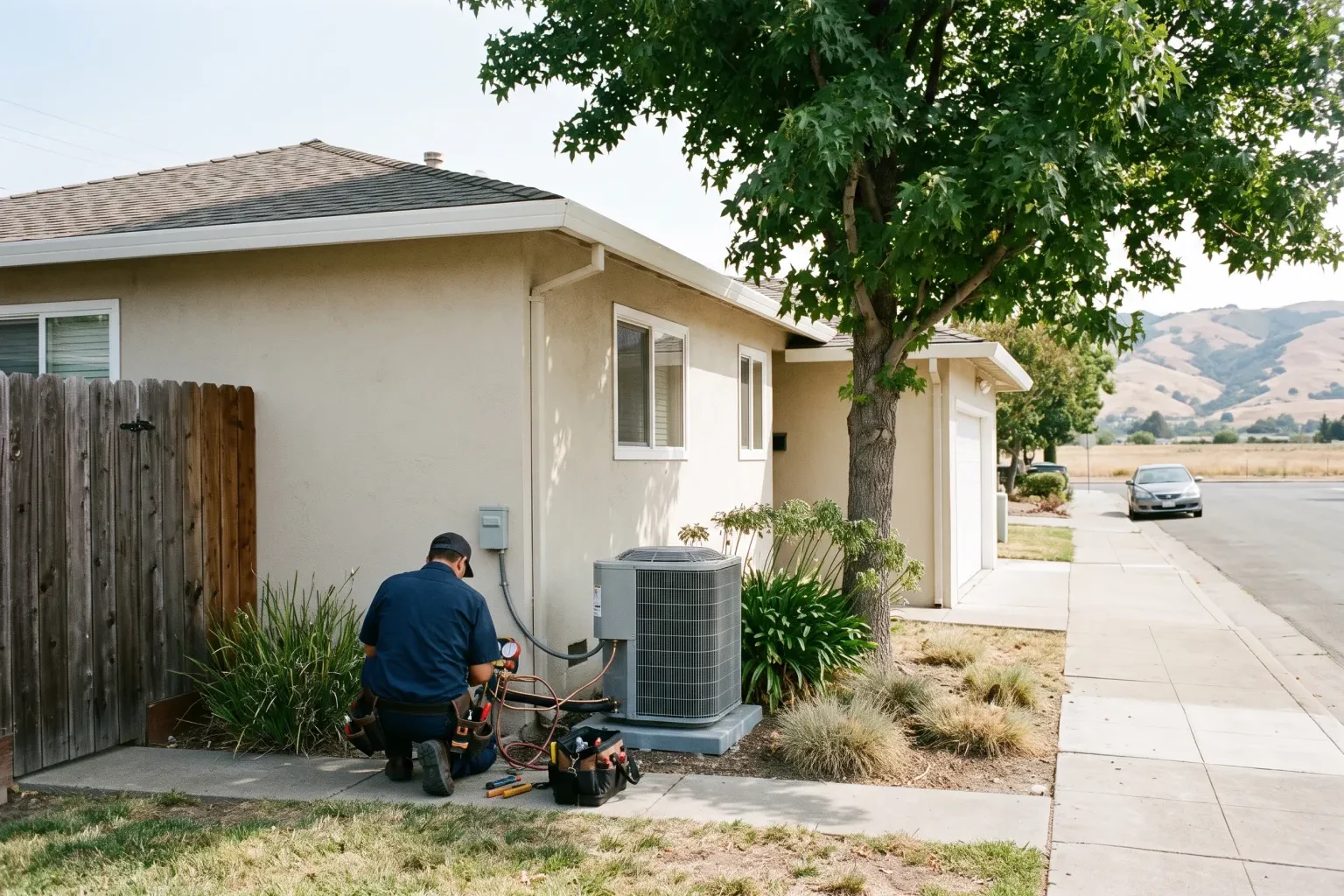
After the evaluation, you receive a written proposal with equipment options and the scope of any duct or electrical work. Once you approve it, we schedule the install and pull the required permits. On the day, the crew protects your floors, removes the old equipment and sets the new air handler or coil and outdoor unit. Refrigerant lines are brazed with nitrogen flowing to keep them clean inside, pressure tested and evacuated before charging.
After startup, we verify refrigerant charge, airflow and temperature split in both heating and cooling modes, test the defrost function and program the thermostat. You will get a walkthrough of how a heat pump behaves differently from a furnace, including longer run times and occasional defrost cycles on chilly mornings. For incentives, we suggest checking BayREN and your local clean energy provider, and we confirm the current offer before quoting it. Note that the federal 25C credit applied only to qualifying heat pumps placed in service before December 31, 2025, so it is not available for new installations.
Heat Pump Installation by city
- Heat Pump Installation in Santa Clara
- Heat Pump Installation in Campbell
- Heat Pump Installation in Milpitas
- Heat Pump Installation in Los Gatos
- Heat Pump Installation in Sunnyvale
- Heat Pump Installation in Monte Sereno
- Heat Pump Installation in Cupertino
- Heat Pump Installation in Saratoga
- Heat Pump Installation in Fremont
- Heat Pump Installation in Mountain View
- Heat Pump Installation in Los Altos
- Heat Pump Installation in Los Altos Hills