
The short answer
If your AC is blowing warm air, icing up, tripping breakers or running without ever reaching the set temperature, it needs a diagnosis. BayPro Heating & Cooling tests the whole system, explains the cause and gives written repair options for San Jose area homes before any work begins.
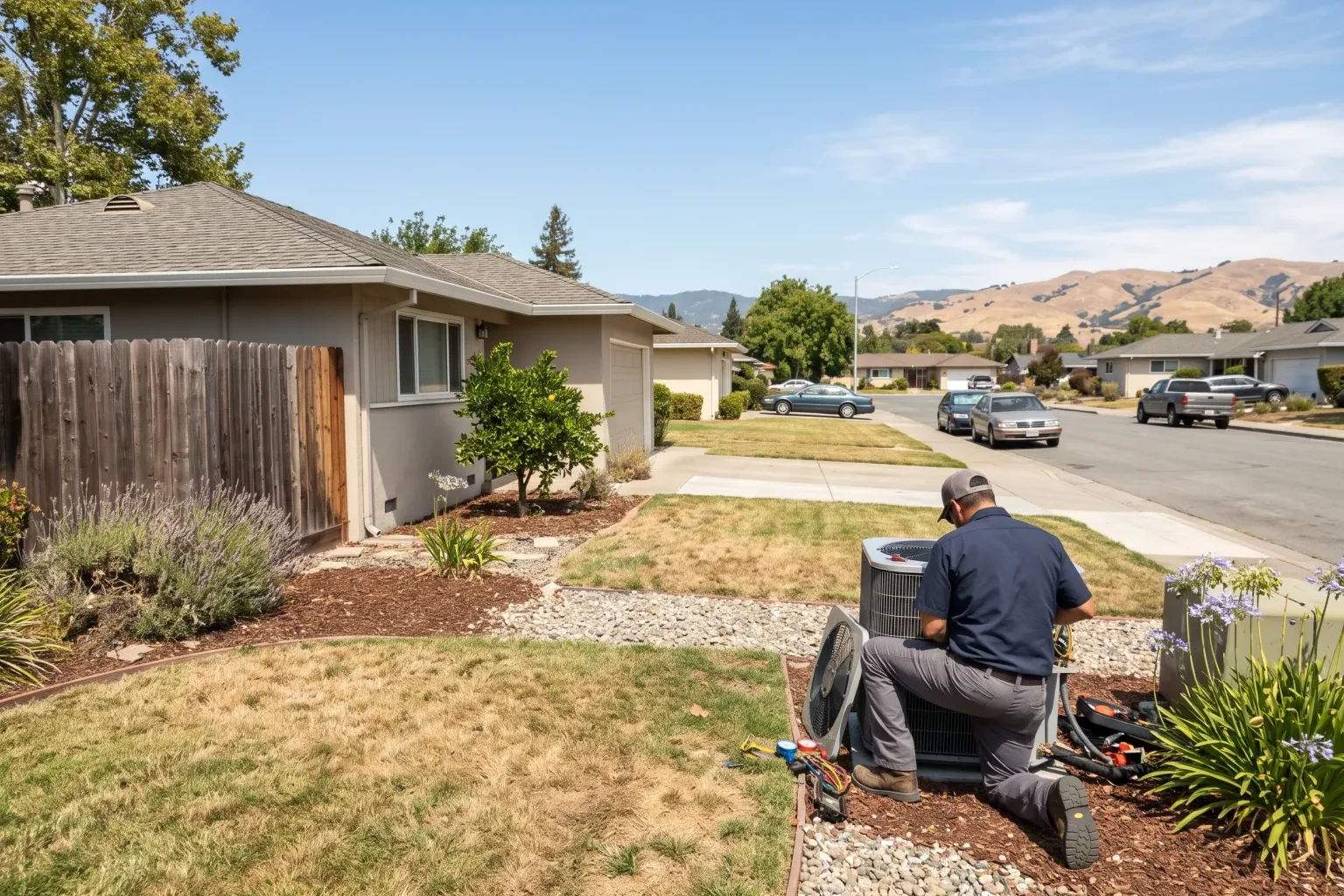
South Bay summers are dry, and the hottest stretches tend to arrive in bursts: a week of mild marine air, then several days when the inland valley bakes. That rhythm is hard on cooling equipment. A system can sit nearly idle for weeks, then get asked to run all afternoon, and weak parts tend to give out right at that moment. BayPro Heating & Cooling repairs central air conditioners, heat pumps running in cooling mode and ductless mini-splits for homes in San Jose and nearby cities. This page covers the warning signs worth acting on, what our technicians measure, how we think about fixing versus replacing, what drives the size of a repair bill and what happens from your first call to the finished job.
Symptoms that call for a technician
Some problems announce themselves loudly. Others creep in over a season until the house just never feels quite cool. Either way, the earlier we look, the more likely the fix stays small. Here are the signs we hear about most often from South Bay homeowners:
- Air from the vents feels barely cooler than the room
- The outdoor unit hums but the fan does not spin, or it does not start at all
- Frost or ice on the copper line near the outdoor unit or on the indoor coil
- Water pooling around the furnace or air handler, or a wet ceiling stain below an attic unit
- A breaker that trips when the system starts
- Short bursts of running followed by shutting off, over and over
- Grinding, squealing, rattling or a sharp clicking sound at startup
- Rooms at the far end of the house staying much warmer than the rest
- A sudden jump in summer electric use with no change in habits
What our technicians check
A cooling system is a loop of electrical parts, moving air and refrigerant, and a failure in one often looks like a failure in another. Low airflow from a clogged filter can freeze the coil and make the refrigerant seem low. A weak capacitor can make a healthy compressor appear dead. So we test the whole loop rather than swapping the first part that looks suspect.
Inside, we inspect the filter, blower motor and wheel, the evaporator coil, the condensate drain and pan, and the thermostat wiring and settings. We measure the temperature drop across the coil and check return and supply airflow. Outside, we look at the condenser coil for dirt and damage, test the contactor, capacitor and fan motor, check the electrical disconnect and measure refrigerant pressures and temperatures to judge whether the charge is correct. If the numbers point to a leak, we look for it at the usual suspects: brazed joints, service valves and the coils themselves.
In older San Jose homes, we also take a look at the ductwork we can reach. Disconnected or crushed attic ducts are a common reason one bedroom never cools, and no amount of refrigerant work will fix that.
Repair it or replace it?
Most calls end with a repair. Failed capacitors, burned contactors, clogged drains, worn fan motors and thermostat faults are routine fixes that can return an otherwise sound system to service for years. We do not push replacement when the equipment has life left in it.
Replacement deserves a real conversation in a few situations: a compressor failure on an older unit, a large refrigerant leak in a coil that is no longer cost-effective to fix, repeated breakdowns in consecutive summers, or a system that uses a phased-out refrigerant and needs a major refrigerant repair. In those cases we lay out both paths side by side so you can weigh the cost of fixing against the cost of a new system and what each means for comfort and energy use.
If replacement is on the table, a heat pump is worth considering, because it cools in summer and heats in winter. Bay Area Air District rules do not require you to replace working equipment, but gas furnaces built from 2029 must meet a zero-NOx standard, so planning ahead can make sense if your furnace is also aging. The federal 25C credit no longer applies to heat pumps installed after December 31, 2025. BayREN and your local clean energy provider may offer current electrification incentives, and we confirm what is available before quoting it.
What affects the cost of an AC repair
We give you a written price for the specific repair before we start, and several factors shape it:
- The part that failed, since a capacitor and a compressor are worlds apart
- Whether refrigerant must be added, and the type your system uses
- Time needed to find a leak, which can be quick or slow depending on where it is
- Access to the equipment, such as a cramped attic, a rooftop unit or a tight side yard
- Whether parts for your brand and model are stocked locally or must be ordered
- Related damage, like a corroded drain pan or a burned wire that must be replaced along with the failed part
How a repair visit works
It starts when you contact us. We ask what the system is doing, when it started and what kind of equipment you have, and we set an arrival window. If you can safely do so, switch the thermostat off when you see ice on the lines, because running a frozen system can damage the compressor.
When the technician arrives, they talk with you first, then test the system indoors and out. Once the cause is clear, you get an explanation in plain terms and a written repair option, plus any other wear we noticed that you may want to plan for. Nothing is done without your go-ahead. After the repair, we run the system, recheck temperatures and pressures and make sure it cycles normally before we leave.
We serve San Jose and nearby cities including Santa Clara, Campbell, Milpitas, Sunnyvale, Cupertino, Los Gatos, Saratoga and Mountain View. Homes in the southern and inland parts of the valley run noticeably hotter in summer than areas near the Bay, so if you live there, booking a check before the heat arrives can spare you a breakdown on the worst day of the year.