
The short answer
Annual HVAC maintenance catches worn parts, dirty coils and airflow problems before they cause a breakdown. We clean and test your system, report what we find and recommend repairs only when they are actually needed.
Heating and cooling equipment in the Santa Clara Valley lives an odd life. It may sit almost untouched through a mild spring, then run hard for a stretch of hot afternoons in late summer, rest again, and wake up for damp winter mornings. That stop-and-start pattern hides small problems until the day you need the system most. Routine maintenance is how you find them first. BayPro Heating & Cooling performs seasonal tune-ups on furnaces, air conditioners, heat pumps and ductless systems for homeowners in San Jose and the cities around it. We clean, measure, adjust and report, so you know what condition your equipment is in and what, if anything, needs attention. Below you will find the signs that a system is overdue, our inspection checklist, how maintenance findings inform repair or replacement decisions, what affects the price of a visit and what the appointment looks like.
Signs Your System Is Overdue for a Tune-Up
If you cannot remember the last time anyone opened up your furnace or air conditioner, that alone is a good reason to schedule a visit. But the equipment often tells you in other ways, too. A filter that turns gray within weeks, a bill that rises season over season, or a system that takes longer to reach the set temperature are all signs of performance slipping away gradually.
- More dust on furniture than usual, or a dusty smell when the system starts
- An outdoor unit choked with leaves, grass clippings or dryer lint
- Water pooling near the indoor unit or a drip from the condensate line
- A noticeable drop in airflow from registers you used to feel clearly
- Equipment that cycles on and off rapidly
- A heat pump or AC whose outdoor fan sounds rougher than before
Our Inspection and Cleaning Checklist
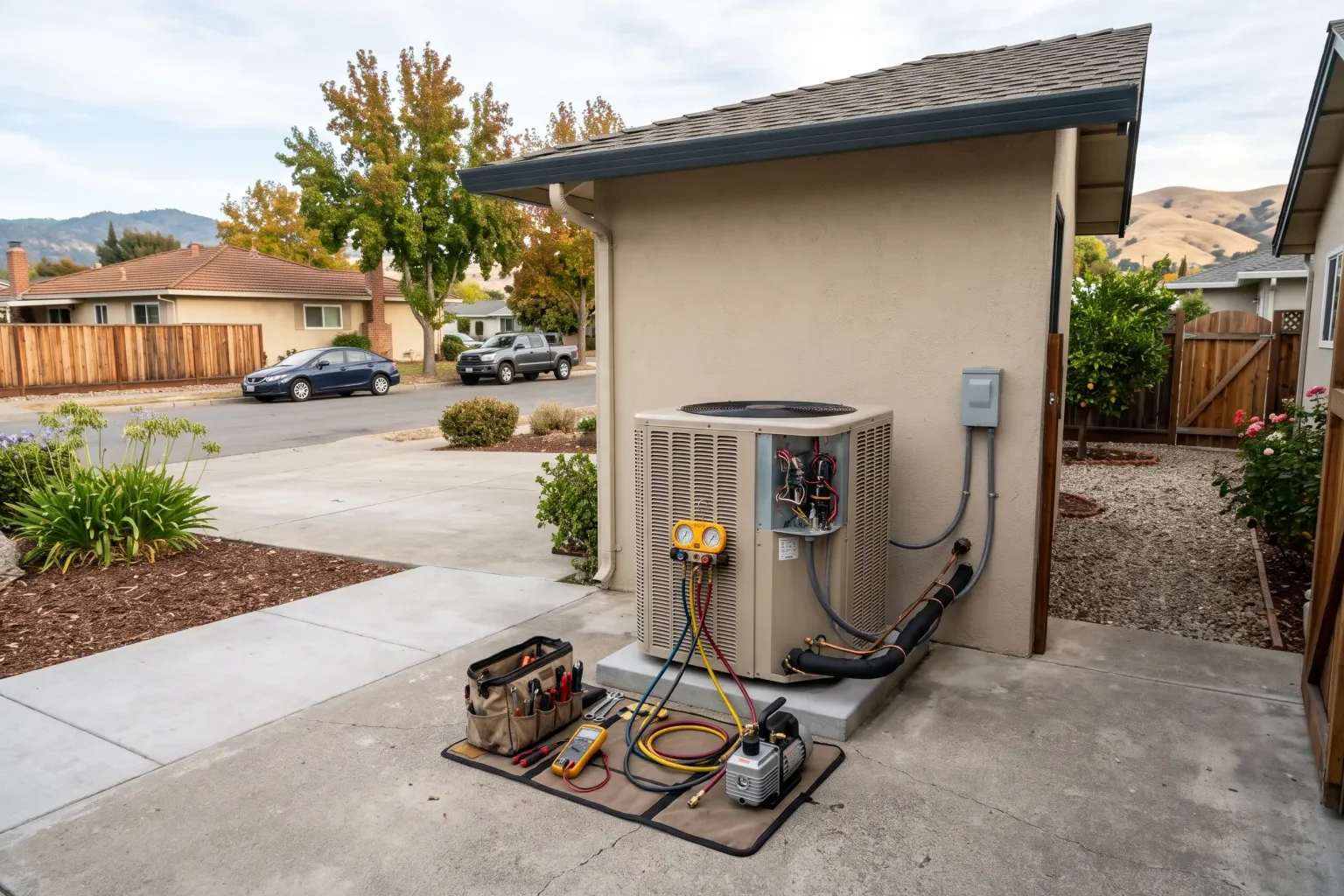
Every tune-up is tailored to the equipment you have, but the core list stays consistent. On the cooling side, we clean the outdoor condenser coil, check refrigerant pressures and temperature split, test the capacitor and contactor, inspect the fan motor and clear the condensate drain. On the heating side, gas furnaces get burner and flame sensor cleaning, ignition and safety control testing, a heat exchanger inspection where accessible, venting checks and a combustion safety reading.
Heat pumps receive both sets of checks plus a test of the reversing valve and defrost operation. Ductless systems get their indoor coils and blower wheels inspected and cleaned, since these collect dust and biological growth that reduce airflow and cause odors.
Across all systems, we measure static pressure to see how hard the blower is working against the ducts, check thermostat calibration and wiring, tighten electrical connections and replace the standard filter. You receive written notes on what we observed, including measurements, so the next visit can be compared against this one.
Outdoor equipment gets attention beyond the coil. We check that the unit sits level on its pad, that shrubs and fences leave enough clearance for airflow, and that refrigerant line insulation has not cracked or been chewed by animals. In yards where sprinklers hit the condenser or ivy climbs over it, we point out the simple changes that protect it between visits.
Using Maintenance Findings to Decide What Comes Next
A tune-up is not a sales call. Most visits end with a clean bill of health and a reminder to change the filter. When we do find something, we sort it into three groups: items that need repair now for safety or to prevent a breakdown, items worth watching over the next season, and optional improvements that would raise comfort or efficiency. You decide which to act on.
Over several years, maintenance records also make replacement planning easier. If a compressor's amp draw is creeping up, a heat exchanger shows early wear or refrigerant needs topping off every year, you see the trend before the failure. That matters in the Bay Area, where Air District rules affect gas furnace replacements: natural gas furnaces manufactured from 2029 must meet a zero-NOx standard, and the rules apply only when existing equipment fails or is replaced. Knowing your furnace's condition ahead of time lets you weigh a heat pump on your own schedule instead of during an emergency.
What Affects the Price of a Maintenance Visit
The cost of a tune-up depends mainly on how much equipment we are servicing and how accessible it is. A single furnace in a garage is a shorter visit than a heat pump with an attic air handler plus two ductless heads upstairs. Systems that have gone many years without service may need extra time for deep coil cleaning or clearing a fully blocked drain line.
Ongoing maintenance plans that cover both a heating and a cooling visit each year are another option, and we will explain what a plan includes for your specific setup. Specialty filters, coil treatments or replacement parts found during the visit are quoted separately and only installed with your approval.
Timing can also play a part. Booking during the shoulder months, before the first heat wave or the first cold, wet week, usually means more scheduling flexibility than calling during a rush, when technicians are busy with breakdowns across the valley.
How a Maintenance Appointment Works
We recommend scheduling heating service in the fall, before the rainy season, and cooling service in spring, before the inland valley heat arrives. Heat pump owners can combine both into one or two visits a year. When you book, let us know what equipment you have and where it is so we can plan the time needed.
The technician starts by asking how the system has been running and whether you have noticed anything unusual. They then work through the checklist, inside and out, and show you anything worth seeing, like a dirty coil before and after cleaning. At the end, you get a summary of the condition of each component, any recommendations and a suggested date for the next visit.