
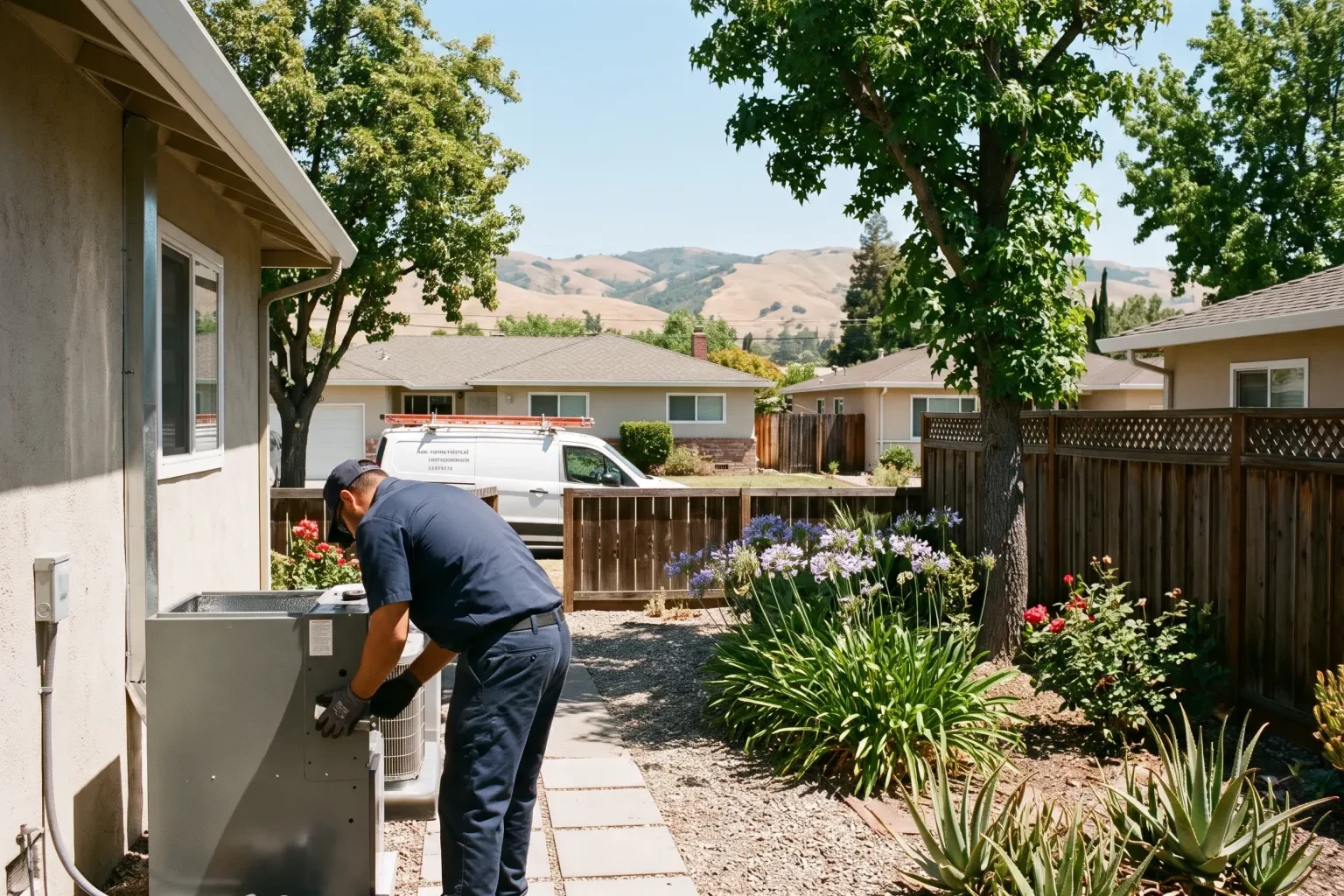
The short answer
Replace a furnace when repairs keep piling up, the heat exchanger is compromised or the unit can no longer heat the home evenly. We size the new equipment to your house, check venting and ducts, and explain how Bay Area Air District rules may affect gas versus heat pump choices.
A new furnace is one of the bigger decisions a homeowner makes about a house, and in the Bay Area it now comes with a regulatory layer that did not exist a few years ago. BayPro Heating & Cooling installs gas furnaces and helps San Jose area homeowners weigh them against heat pump alternatives, so the equipment you choose makes sense for your house, your budget and the rules that apply when you replace it. Most furnaces we replace are in attics, garages, hallway closets or crawlspaces of homes built decades ago, and each location brings its own venting, clearance and duct connection questions. Below you will find the signs that replacement is near, what our evaluation covers, honest guidance on repairing versus replacing, the factors that drive the cost, and a step-by-step look at how an installation unfolds.
When a Furnace Is Ready to Be Replaced
Furnaces rarely quit without warning. The pattern is usually a slow slide: a service call one winter, another the next, rooms that never quite warm up, and a utility bill that keeps creeping upward even though the thermostat setting has not changed. At some point the money spent keeping an old unit alive would be better put toward equipment that runs reliably.
Safety findings can force the decision sooner. A cracked heat exchanger, scorching around the burner area, or a carbon monoxide alarm that traces back to the furnace are not problems to nurse along. In those cases we will explain exactly what we found and recommend shutting the unit down until it is replaced.
- Repeated ignition failures, flame sensor faults or limit switch trips
- Uneven heat from room to room despite clean filters and open registers
- Rust, corrosion or water around the cabinet base
- Loud booming at startup or rattling from the blower compartment
- Visible cracks or damage found during an inspection of the heat exchanger
Our Pre-Installation Assessment
Sizing a furnace by matching the old nameplate is a shortcut that often carries old mistakes forward. Many homes have had windows replaced, insulation added or rooms opened up since the original unit went in. We calculate the heating load based on the house as it is today, then select capacity and blower performance to match.
We also inspect the parts of the system that stay behind. Flue venting has to suit the new furnace type, and a high-efficiency condensing unit needs a different vent material and a condensate drain. Return air size, supply duct condition, the gas line, electrical supply and clearances in the attic or closet all get checked so the new equipment is not handicapped by an old bottleneck. Where ducts are leaking or crushed, we will tell you and explain what fixing them would do for comfort.
Comfort features belong in the same conversation. A two-stage or modulating burner runs at low fire most of the time in our climate, which means quieter operation and fewer temperature swings between cycles. A variable-speed blower can also help if you plan to add air conditioning later or want better filtration. We explain which upgrades fit how you live in the house and which ones you can safely skip, because a feature that sounds impressive on a brochure is not always worth having in a mild Santa Clara Valley winter.
Repair, Replace, or Switch to a Heat Pump
Not every struggling furnace needs to go. A failed igniter, a weak inducer motor or a dirty flame sensor can often be fixed in a single visit, and on a younger unit that is the sensible call. We weigh the age of the furnace, the cost of the repair relative to its remaining life, and how often it has needed attention lately.
When replacement is the right move, the fuel choice deserves real thought. Under Bay Area Air District Rule 9-4, natural gas furnaces manufactured from 2029 must meet a zero-NOx emission standard, which in practice points homeowners toward heat pumps when a furnace is replaced after that date. These rules do not require replacing working equipment; they apply only when an existing furnace fails or is replaced. Some homeowners still choose a new gas furnace today, while others decide to make the switch now on their own schedule rather than during an emergency later. We lay out both paths and let you choose.
Factors That Influence Installation Cost
Every quote we write is specific to the house in front of us, and we prefer to explain the line items rather than hand over a single number with no context. The main variables include:
- Furnace type, efficiency level and whether it has a single-stage, two-stage or modulating burner
- Location of the unit and how easy it is to remove the old one and bring in the new
- Venting changes, especially when moving to a condensing furnace
- Duct modifications, new returns or transitions to fit the new cabinet
- Gas line, electrical or condensate drain updates
- Thermostat upgrades and any add-on air filtration
- Local permit and inspection requirements
What Happens on Installation Day
We start by laying down floor protection along the path to the furnace, shutting off gas and power, and disconnecting and removing the old unit. The new furnace is set in place, leveled and connected to the plenum and return. Venting, gas piping and electrical are connected, and condensing models get their drain line and trap installed.
With everything connected, we test for gas leaks, start the furnace and run it through several heating cycles. We measure gas pressure, temperature rise and static pressure in the ductwork, check the safety controls and confirm the thermostat is communicating properly. Then we walk you through filter changes, show you where the shutoffs are and answer any questions. Old equipment leaves with us. Most straightforward replacements are completed in a day, and we schedule the permit inspection with you afterward.
A few weeks after the install, it is worth paying attention to how the new furnace behaves through a full cold snap. If a room still lags behind, or you hear something unexpected from the cabinet or ducts, let us know. Small balancing adjustments at the registers or dampers often make a noticeable difference once the system has run through real weather rather than a test cycle.