
The short answer
BayPro Heating & Cooling repairs heating and cooling systems in seventeen Santa Clara County communities, including Sunnyvale, Cupertino, Campbell, Los Gatos and Morgan Hill. Most homes are around 13 miles from our San Jose base.
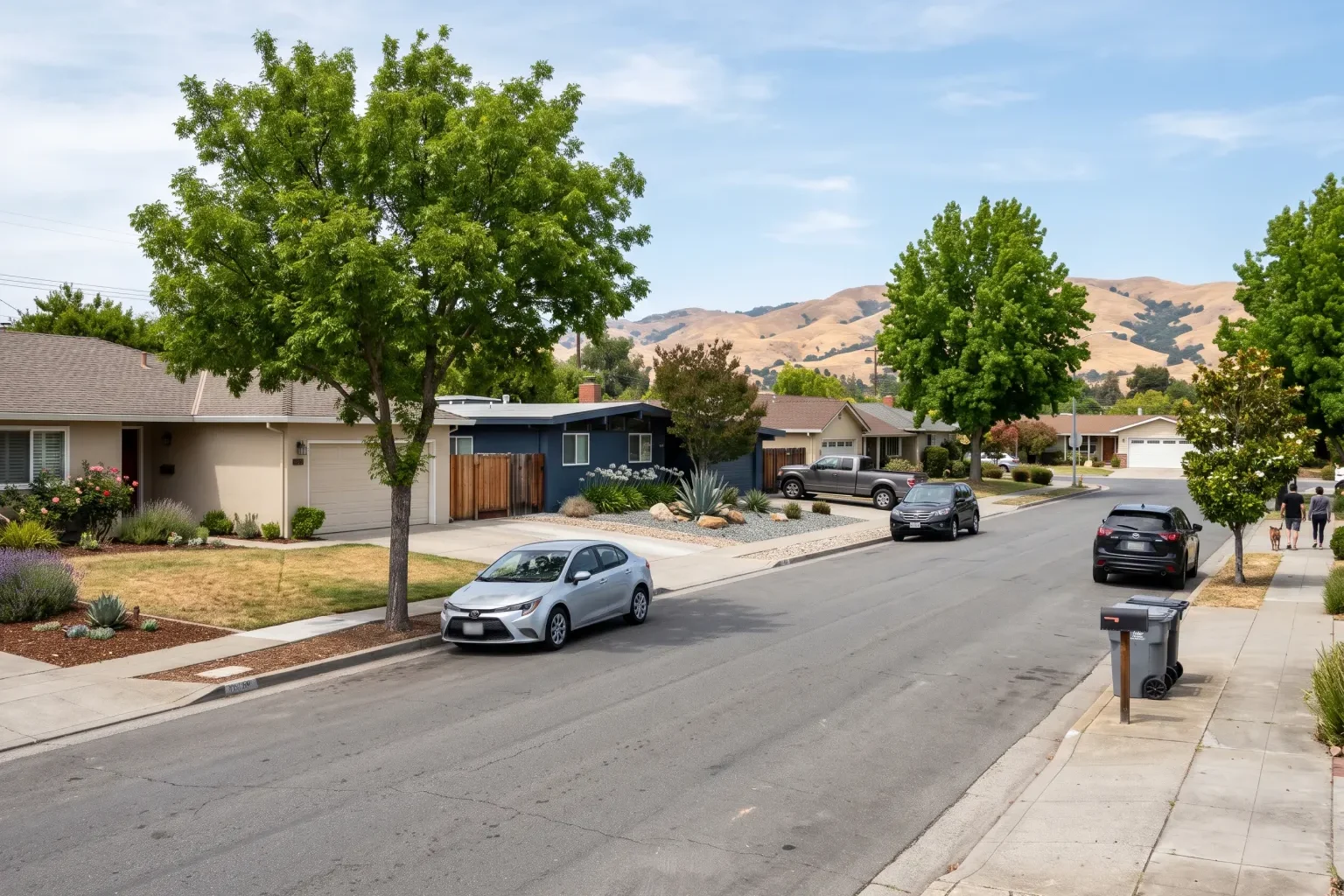
Santa Clara County is our home ground. From the San Jose shop we cover seventeen communities, from Palo Alto and Stanford at the north end to Morgan Hill in the south, and from Milpitas and the East Foothills over to Saratoga, Los Gatos and the mountain neighborhoods of Lexington Hills. A typical run to one of them is about 13 miles. The valley looks uniform on a map, yet heating and cooling problems change a lot from one end to the other.
A valley with a heat gradient
The Santa Clara Valley has a Mediterranean climate: dry summers and mild, damp winters. What surprises newcomers is how much hotter the inland and southern parts get. A July afternoon in Morgan Hill or the East Foothills can push an air conditioner far harder than the same day in Mountain View or Palo Alto, where Bay air takes the edge off.
That pattern shows up in our repair log as a type of failure, not just a count. Southern and foothill homes see more worn capacitors, overheated compressors and tired condenser fans. Bayside homes see more corrosion, clogged drain lines and systems that rarely run hard yet still age out.
Communities on our Santa Clara County route
We schedule visits throughout the county and group nearby calls when we can, which keeps arrival windows tighter.
- North county: Palo Alto, Stanford, Los Altos, Los Altos Hills, Loyola, Mountain View
- Central valley: Sunnyvale, Santa Clara, Cupertino, Campbell, Milpitas
- West side and hills: Saratoga, Monte Sereno, Los Gatos, Lexington Hills
- East and south: East Foothills, Morgan Hill
From ranch houses to newer builds
Much of the county was built out in the decades after the war, so we spend a lot of time on single-story homes with original duct runs in the attic or under the floor. Those ducts leak, sag and lose insulation, which can make a sound furnace or AC seem broken. Newer townhomes and remodels bring tighter spaces, high-efficiency furnaces with condensate drains, variable-speed heat pumps and ductless mini-splits. We repair all of these and explain clearly which problems are worth fixing on an older system.
What to expect once we arrive
The technician starts by listening to how the problem shows up: a burning smell at the first cold snap, rooms that never cool past mid-afternoon, a breaker that trips when the compressor kicks on. Then come the measurements, including temperatures across the coil, electrical readings on motors and capacitors, gas pressure and flame checks on furnaces, and static pressure in the ducts when airflow is in question. You get a plain explanation of the cause, the repair that would fix it and any related wear we noticed, so you can choose what to do now and what can wait.
Rules that affect a replacement decision
If a repair turns into a replacement conversation, two facts help. Bay Area Air District rules never require pulling out working equipment. And under Rule 9-4, gas furnaces manufactured from 2029 must meet a zero-NOx standard, which points future replacements toward heat pumps. We can also point you to BayREN and your clean energy provider, whose incentive programs vary by funding cycle.