
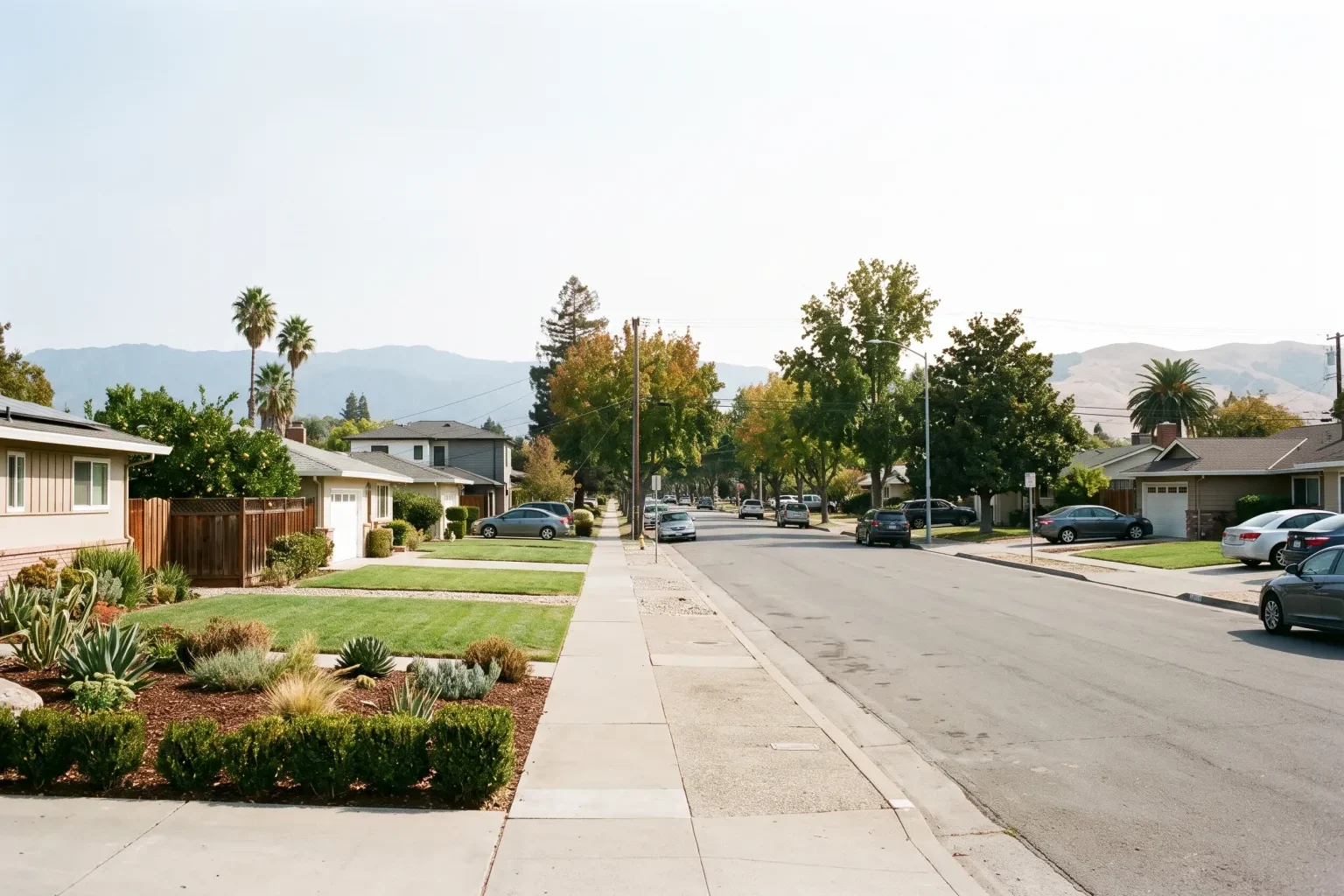
The short answer
AC installation in Santa Clara starts with a load calculation and a look at your ducts, attic and electrical panel, not with a unit picked off a chart. We install central air, ductless mini-splits and heat pumps, and we explain which fits your house before any work begins.
A lot of houses in Santa Clara were built for a valley that rarely needed cooling, and many of them still rely on open windows and a ceiling fan when August arrives. That works until a run of hot, still afternoons turns a bedroom into a place nobody wants to sleep. BayPro Heating & Cooling drives about 5 miles northwest from our San Jose base to install central air and ductless systems across 95050, 95051, 95053 and 95054. This page covers what a Santa Clara installation actually involves: how we size the equipment, what your existing ducts and electrical panel have to say about the plan, and why some homeowners here end up choosing a heat pump instead of a cooling-only unit.
Adding air conditioning to a house that never had it
The most common Santa Clara request we see is a first-time install: a single-story home with a gas furnace in the hallway closet or garage and no cooling at all. Those furnaces usually move air through ducts sized only for heating, and heating needs less airflow than cooling. Before recommending a coil and condenser, we measure supply and return sizes and check how much air the existing blower can push. If the ducts are undersized, a new AC will run loud, freeze its coil or leave the far rooms warm.
Sometimes the fix is modest, such as adding a return in a back hallway or replacing a crushed flex run in the attic. Other times the honest answer is that ductless heads in the rooms that overheat will cost less effort and perform better than reworking the whole duct system. We lay out both paths in plain terms so you can weigh them.
What we check on the first visit
A proper quote takes more than a glance at square footage. Two homes with the same floor area on neighboring streets can need very different capacity depending on window exposure, attic insulation and ceiling height.
- A room-by-room load calculation that accounts for west-facing glass, insulation depth and air leakage
- Duct condition in the attic or crawlspace, including disconnected joints and kinked flex duct
- Electrical panel capacity and whether a dedicated circuit for the condenser is available
- A spot for the outdoor unit that respects setbacks, keeps noise away from bedroom windows and leaves service clearance
- Condensate drainage, since a coil sitting above a finished ceiling needs a safe path for water
- Thermostat wiring, and whether a smart thermostat makes sense with the new equipment
Central AC, ductless or a heat pump?
Santa Clara sits in the middle of the valley, where summers are dry and warm and winters are mild and damp. That climate makes the cooling-only question worth a second look. A heat pump installs much like a central air conditioner but also heats the house, which can let you retire or back up an older gas furnace.
There is also a regulatory reason to think ahead. Under Bay Area Air District Rule 9-4, natural gas furnaces manufactured from 2029 must meet a zero-NOx standard, and in practice that points homeowners toward heat pumps when a furnace is replaced after that date. The rule does not force anyone to tear out working equipment. Still, if your furnace is aging and you are adding cooling now, it can make sense to install one system that handles both jobs rather than pairing a new AC with a furnace that will need replacing soon.
Ductless mini-splits suit additions, converted garages and homes where running new ducts would mean opening ceilings. A single outdoor unit can feed several indoor heads, each with its own setting, which helps in houses where the upstairs runs warmer than the ground floor.
How installation day usually goes
Most central AC installs in a Santa Clara single-story home take a day or two. We protect floors along the path to the attic or furnace closet, set the evaporator coil on the furnace or air handler, run the refrigerant lines and wiring to the outdoor pad, and pull a vacuum on the line set before releasing refrigerant. A deep vacuum removes moisture that would otherwise shorten the compressor's life, and it is a step we never rush.
Once the system runs, we check refrigerant charge against the manufacturer's specifications, measure temperature drop across the coil and confirm airflow at the registers. We then walk you through the thermostat, filter location and the outdoor clearance the condenser needs. Permits and inspections are handled as part of the job, and we coordinate the inspection visit with you.
Incentives and paperwork worth knowing
The federal 25C credit that used to apply to qualifying heat pumps covered equipment placed in service before December 31, 2025, so it does not apply to new installs now. Regional programs still exist: Bay Area homeowners can check BayREN and their local clean energy provider for current heat pump and electrification incentives. Those amounts change by funding cycle, so we confirm what is available at the time of your project before including it in any proposal.
We also serve neighbors in Sunnyvale, Cupertino, Campbell, Milpitas and Mountain View, so if you are comparing notes with friends nearby, the same approach applies across the area.
More services in Santa Clara
- AC Repair in Santa Clara
- Heating Repair in Santa Clara
- Heat Pump Installation in Santa Clara
- Furnace Repair in Santa Clara