
The short answer
Saratoga furnace repairs often involve condensing furnaces with clogged drains or venting faults, plus attic and crawlspace units that are hard to reach. We read the control board's fault code, test the startup sequence, fix the failed part and check combustion safety.
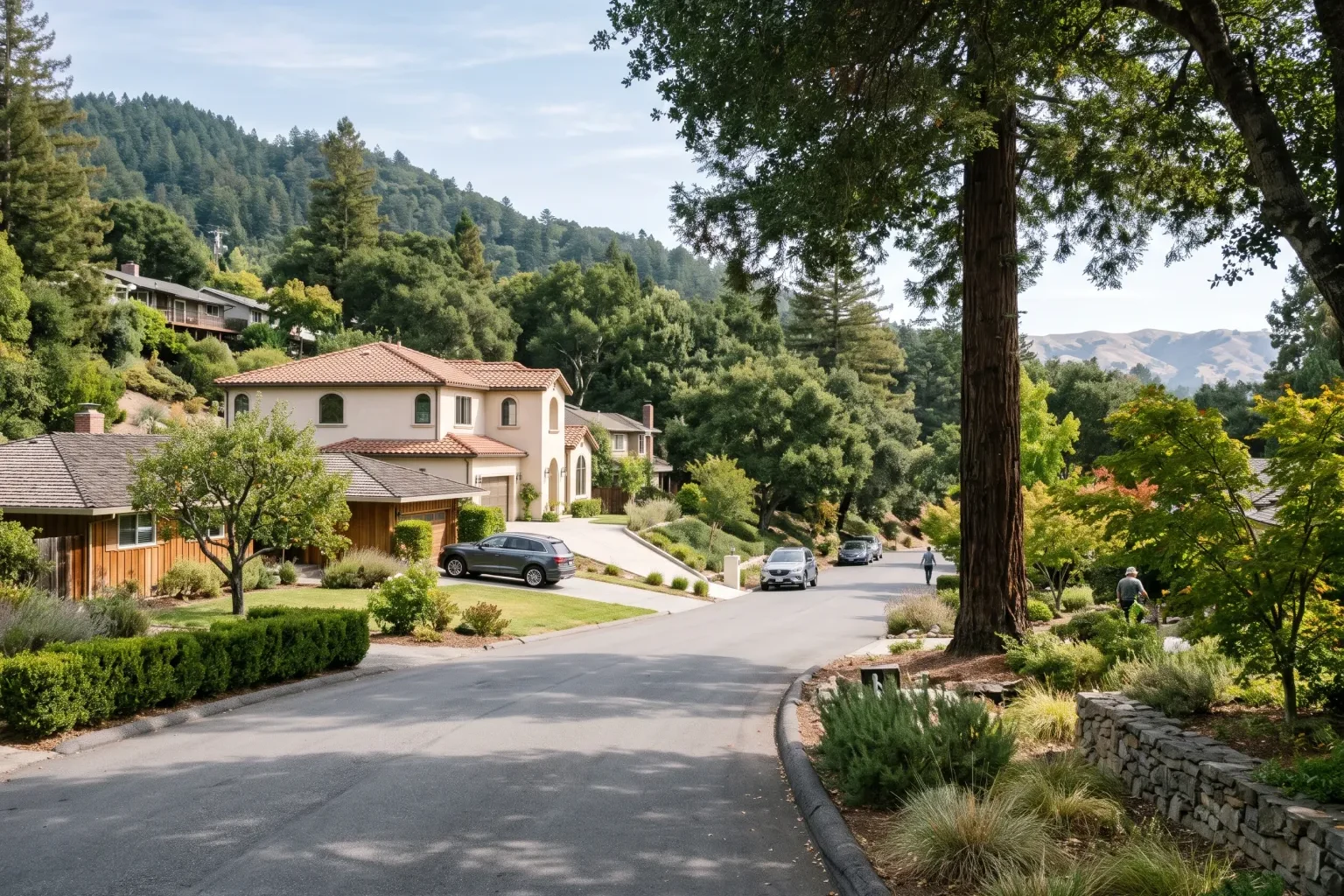
Evenings in Saratoga can turn cool quickly once the sun drops behind the hills, and in the damp months a working furnace is what makes a large house feel comfortable from the entry to the far bedrooms. Many homes in 95070 have more than one furnace, or a single unit tucked into an attic or crawlspace where problems go unnoticed until the heat stops. BayPro Heating & Cooling repairs standard and high-efficiency gas furnaces across Saratoga, roughly 9 miles southwest of our San Jose base. This page focuses on what we see in Saratoga homes: condensing furnaces with drainage trouble, units installed in hard-to-reach spaces, and the error codes your furnace is already trying to tell you about.
Your furnace may already be telling you what is wrong
Most furnaces built in recent decades have a small light on the control board that flashes a pattern when something fails. A label inside the furnace door translates the pattern. Before calling, it helps to note the flash sequence without opening anything beyond the access door. That code narrows the search: a pressure switch fault, an ignition lockout, a limit trip or a flame sensing failure all have different causes and parts.
We still test before replacing anything. A pressure switch code, for example, can mean the switch itself failed, but it can also mean a blocked vent, a cracked hose or a weak inducer motor. Replacing the switch alone would not fix those.
High-efficiency furnaces and their drains
Condensing furnaces, the kind with white plastic vent pipes, pull so much heat from combustion gases that water condenses inside them. That water drains through a trap and a line, sometimes to a pump. When any part of that path clogs or a pump fails, water backs up, the pressure switch cannot close, and the furnace locks out.
Typical fixes include cleaning the trap, clearing the line, replacing a failed condensate pump and correcting a vent pipe that has sagged and collects water. We also check that the intake and exhaust terminations outside are not blocked by leaves, nests or mulch, which is worth watching on heavily planted lots.
Attic, crawlspace and multiple-furnace homes
Large Saratoga homes often split heating between two or more furnaces, each serving a wing or a floor. When one fails, part of the house goes cold while the rest stays fine, which can be confusing at first. We check each unit and its thermostat to make sure the problem is the equipment and not a wiring or zoning issue.
Furnaces in attics and crawlspaces are prone to a few problems of their own.
- Dust and debris build up on burners and the flame sensor because the unit is rarely inspected
- Rodents nest near warm equipment and can damage wiring or insulation
- Condensate lines in attics can freeze or crack on unusually cold nights if they are not insulated
- Flues that pass through tight spaces get bumped during other work and separate at joints
- Filters in remote returns are easy to forget and become heavily clogged
Combustion safety on every call
Any furnace repair includes a check of the parts that keep combustion gases out of your home. We inspect the heat exchanger for cracks, confirm the flue is intact and drafting, test for carbon monoxide near the furnace and at supply registers, and look at gas connections for leaks. If something is unsafe, we explain it clearly, show you what we found and recommend the furnace stay off until it is corrected.
Keep carbon monoxide alarms on each floor near bedrooms, and test them when you change clocks in the spring and fall.
Deciding between repair and replacement
Most furnace failures are worth fixing. When a furnace is older and needs a major part such as a heat exchanger or control board, we lay out both options and their trade-offs so you can decide. The Bay Area Air District's Rule 9-4 is relevant here: natural gas furnaces manufactured from 2029 must meet a zero-NOx emission standard, which in practice points homeowners toward heat pumps when a furnace is replaced after that date. The rule never requires replacing working equipment, and we will keep repairing your furnace as long as that makes sense.
If you are thinking about replacement anyway, a heat pump suits the area's mild winters well. We also repair furnaces in Monte Sereno, Cupertino, Campbell, Los Gatos and Santa Clara.
More services in Saratoga
- AC Repair in Saratoga
- Heating Repair in Saratoga
- Heat Pump Installation in Saratoga
- AC Installation in Saratoga