
The short answer
The right AC for a Sunnyvale home depends on its construction: houses with attic ducts can take central air, while flat-roofed homes and townhouses often do better with ductless systems. We size equipment with a load calculation and explain heat pump options before you decide.
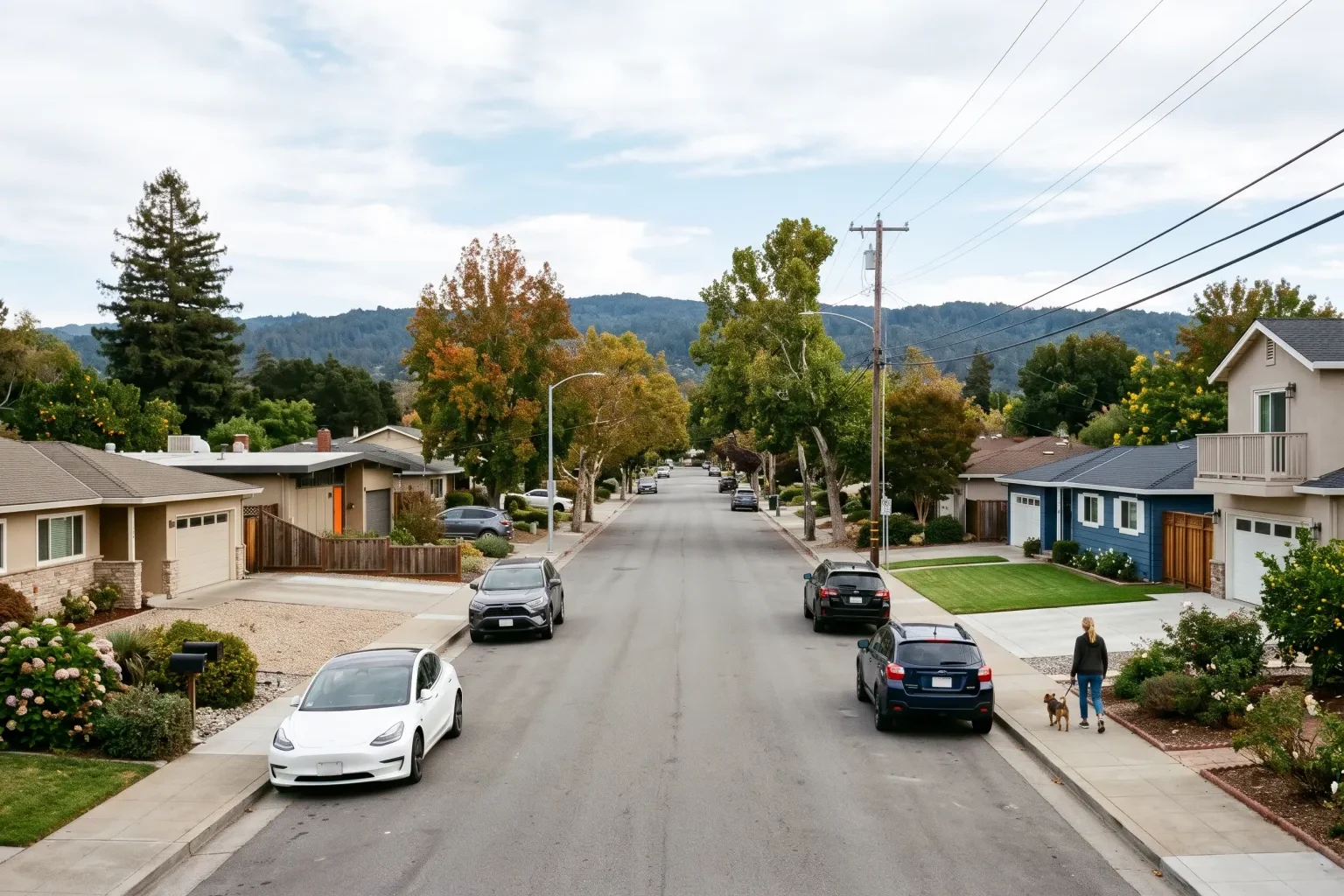
Sunnyvale stretches from the marshes near the Bay down toward the Cupertino border, and the cooling needs change along the way. Homes in the northern neighborhoods often get some relief from Bay breezes on summer afternoons, while houses farther south feel the valley's heat more directly. The housing stock varies just as much: mid-century tracts, flat-roofed homes with little or no attic, townhouses with shared walls, and newer two-story builds. BayPro Heating & Cooling installs central air, ductless mini-splits and heat pumps across 94085, 94086, 94087 and 94089, about 8 miles northwest of our San Jose base. This page focuses on the installation decisions that come up in Sunnyvale houses in particular.
Start with how the house is built
Conventional central air needs ducts and a place to put them. A ranch house with an attic and an existing forced-air furnace is the easy case: we add an evaporator coil above the furnace, run refrigerant lines to an outdoor condenser and use the ducts already there, after confirming they can handle cooling airflow.
Many Sunnyvale homes are not built that way. Mid-century houses with flat or low-slope roofs, including Eichler-style designs, often have no attic for ducts and may have been heated with radiant floors or wall heaters. Running ducts through those houses usually means dropping ceilings or building soffits, which changes the look of the home. In those cases, ductless mini-splits with slim indoor heads are typically the cleaner solution.
Townhouses, condos and shared walls
Sunnyvale has a large share of attached housing, and installing AC there comes with its own checklist.
- HOA approval: many associations regulate where condensers may sit, what they look like and how lines are routed on the exterior
- Limited outdoor space: small patios and side yards may need a compact condenser or a wall-mounted bracket
- Noise near neighbors: placing equipment away from a neighbor's bedroom window is both courteous and often required
- Closet furnaces: units in hallway closets have tight clearances that limit the size of a cooling coil
- Electrical service: older units may have smaller panels that need evaluation before adding a condenser circuit
Sizing for north and south Sunnyvale
Two similar houses can need different equipment depending on where they sit and how they face. We calculate the cooling load room by room, considering window area and orientation, insulation, shading, the number of people in the home and the local climate. A home near the Bay may need less capacity than an identical one closer to Cupertino.
Correct sizing matters because an oversized system short-cycles, which wastes energy, wears parts faster and leaves rooms feeling clammy. An undersized one runs all afternoon without catching up. Variable-speed equipment can help bridge the gap by running at lower output most of the time and ramping up on the hottest days.
Should the new system heat, too?
A heat pump looks and installs much like a central air conditioner, but it also heats. Given Sunnyvale's dry summers and mild, damp winters, a heat pump can usually carry the whole year, which is why we always ask about the age of your furnace or wall heater before quoting cooling alone.
Bay Area Air District Rule 9-4 adds context: natural gas furnaces manufactured from 2029 must meet a zero-NOx emission standard, which in practice points homeowners toward heat pumps when a furnace is replaced after that date. The rule does not require replacing anything that works. It is still a good reason to consider whether a combined system makes more sense than adding a cooling-only unit to a furnace that is near the end of its life.
For ductless installations, the same logic applies: nearly every mini-split sold today is a heat pump, so the indoor heads that cool your rooms in August can also warm them in January.
The installation itself
Once you approve a proposal, we schedule the work and handle the permit. On site we protect floors, set the indoor equipment, mount and level the outdoor unit, run and insulate refrigerant lines, and connect the condensate drain and wiring. We pressure-test and evacuate the lines before releasing refrigerant, then verify charge, airflow and temperature drop. Before we leave, you get a walkthrough of the thermostat or remote controls and filter care.
The federal 25C credit no longer applies to systems installed after 2025. BayREN and your local clean energy provider may have current heat pump incentives; we confirm details before quoting them. We also install cooling in Mountain View, Santa Clara, Los Altos, Cupertino and Los Altos Hills.
More services in Sunnyvale
- AC Repair in Sunnyvale
- Heating Repair in Sunnyvale
- Heat Pump Installation in Sunnyvale
- Furnace Repair in Sunnyvale